
We saved many of the activities we were most excited about for our second week in Madrid!
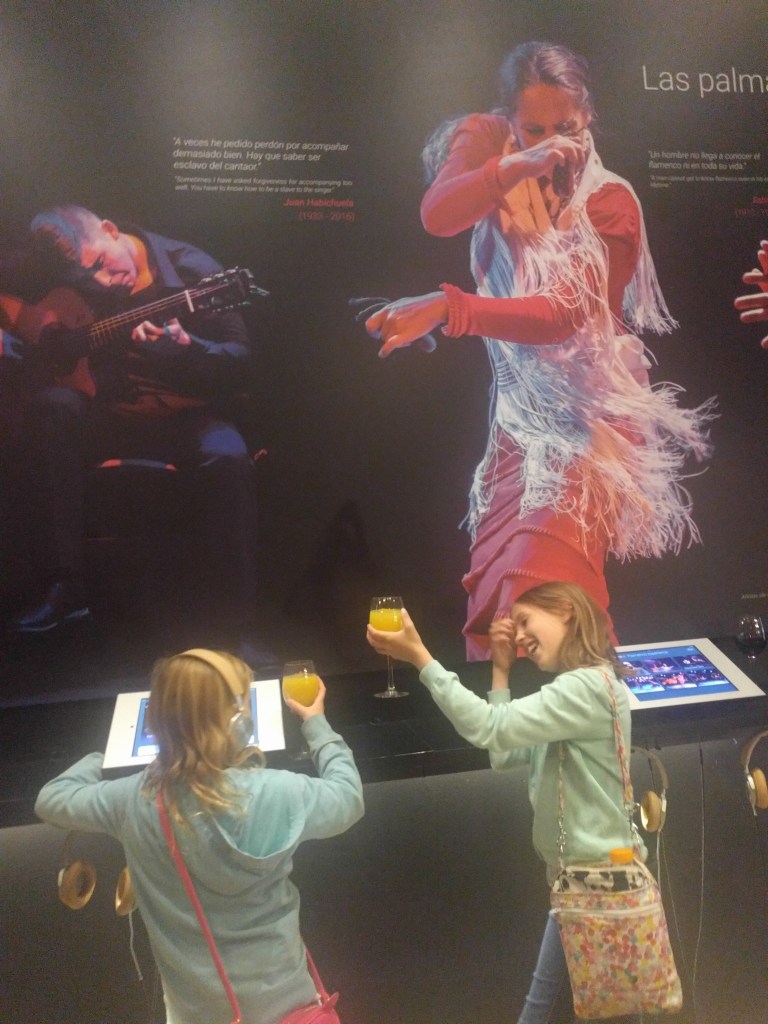
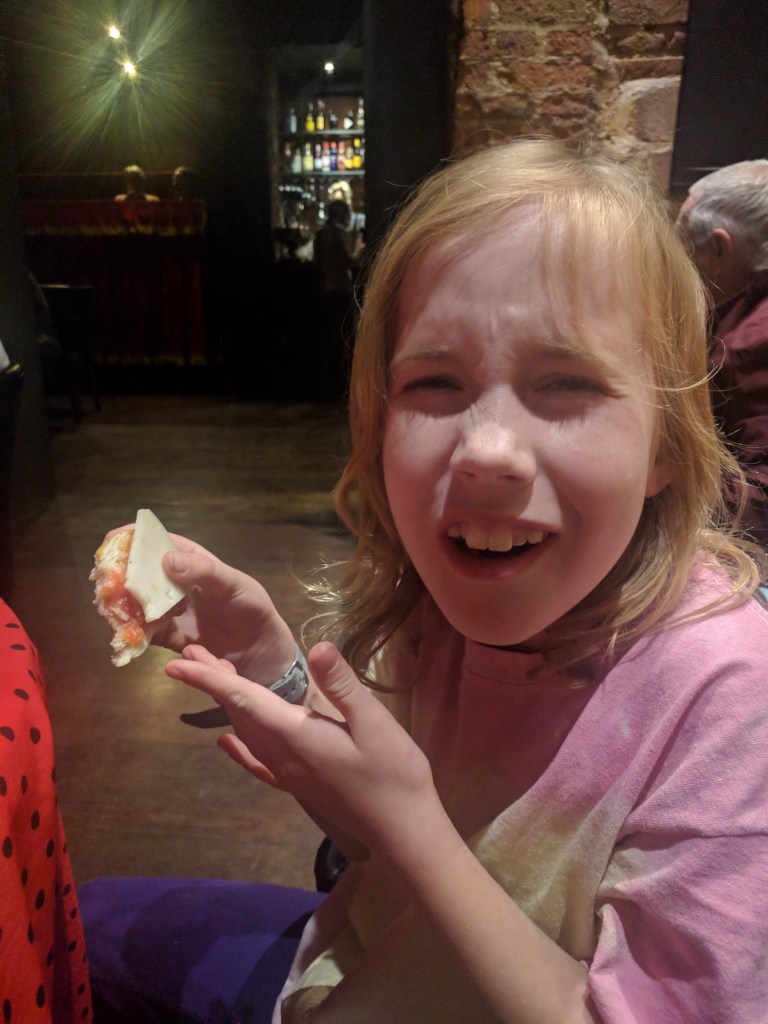
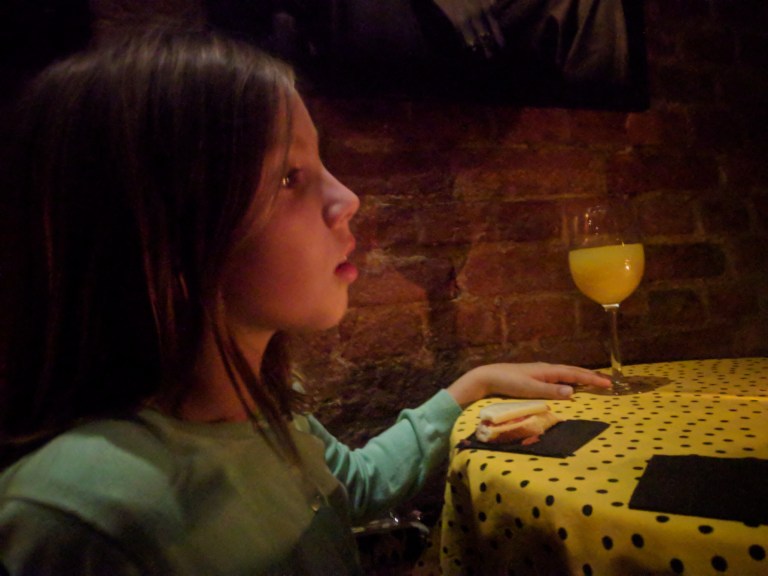
We followed a very unusual schedule on Monday. We began our day with school work like usual, but then went home over lunch and left all of our school supplies at home for the afternoon. We found a library in Retiro Park that had a small English kids section and spent a few hours enjoying reading a variety of paper books. After the library, we spent a while at the park and then headed to a pizza place for a super early dinner. Then we got ready for our big educational event of the day – a flamenco show! We arrived in time to utilize the educational area to learn about the music, dancing and costumes involved in a flamenco show. We learned that flamenco dancing originated with gypsies in the Iberian Peninsula. The girls loved getting orange juice in a wine glass, and we all enjoyed tapas with bread, tomatoes and goat cheese while we waited for the show to begin. It was a wonderful performance, and Audrey was tapping along under the table throughout the show! The whole way home after the show, both girls were dancing flamenco down the sidewalk.
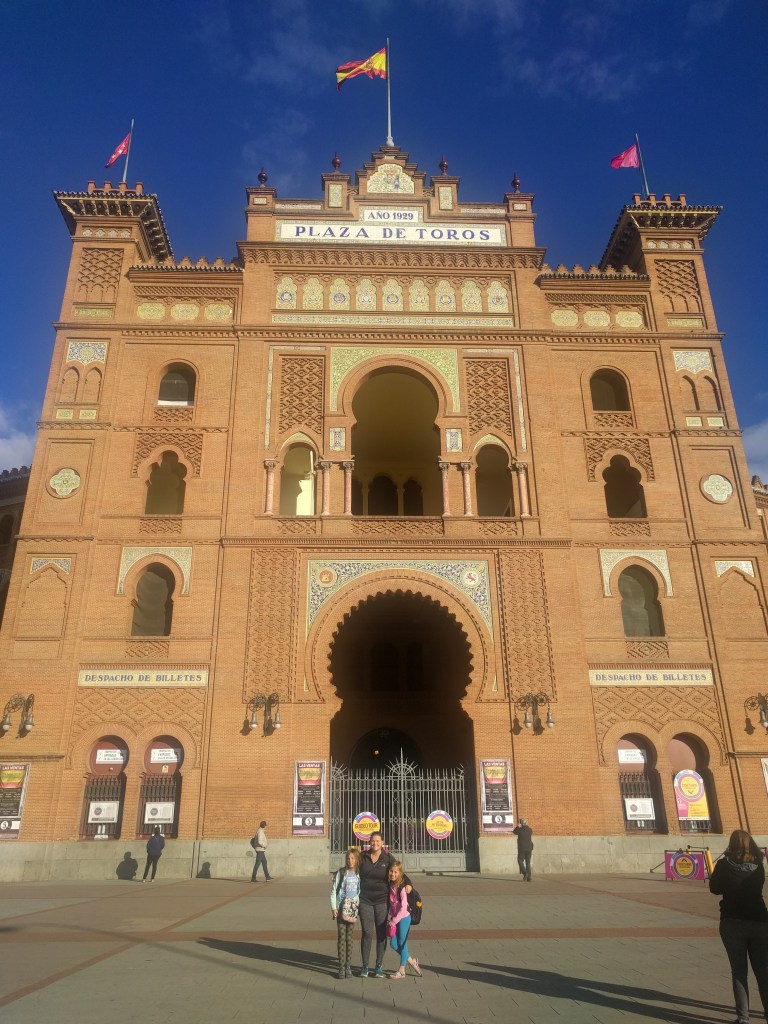
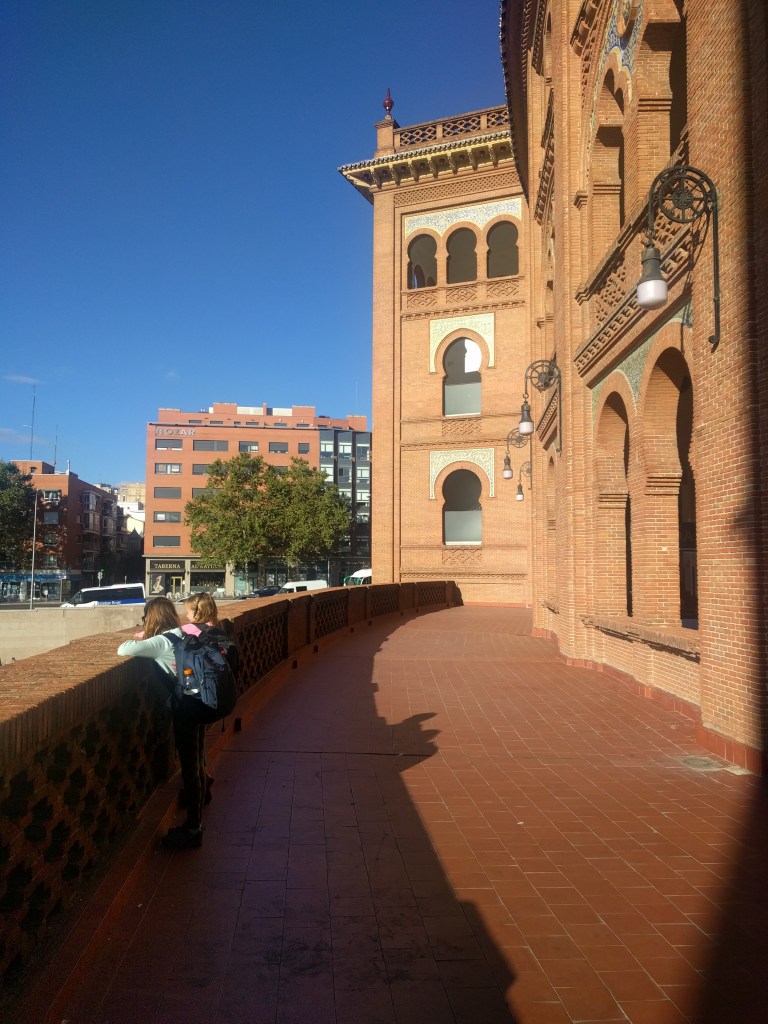
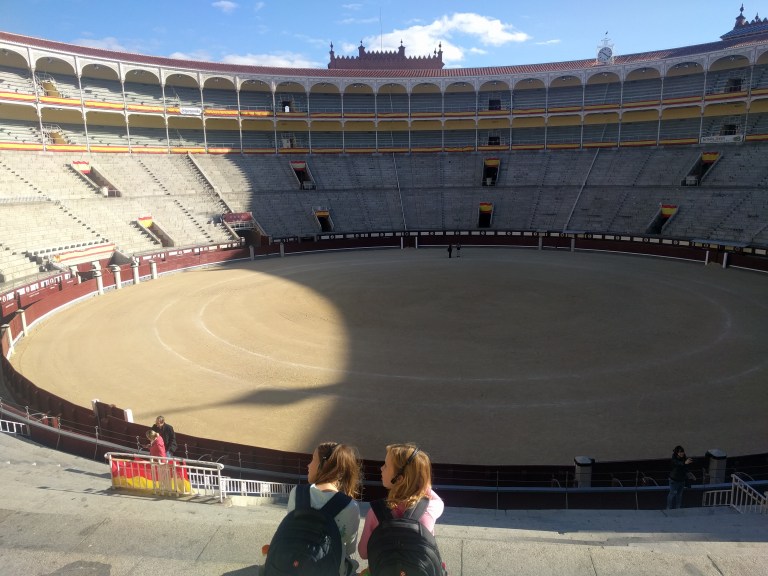
On Tuesday, we learned about the Spanish tradition of bullfighting and visited Las Ventas bullfighting ring. The Las Ventas bullfighting ring is the third largest bullfighting ring in the world. While each of us had different ideas about bullfighting, we all enjoyed the architecture of the building and learning about the history of bullfighting. I did not realize that bullfighting was still practiced in so many places throughout the world. I think it would be fascinating if American football tickets for afternoon games were sold on a similar system to bullring tickets with different prices for seats in the sun, in the shade and seats that will be both in sun and shade.

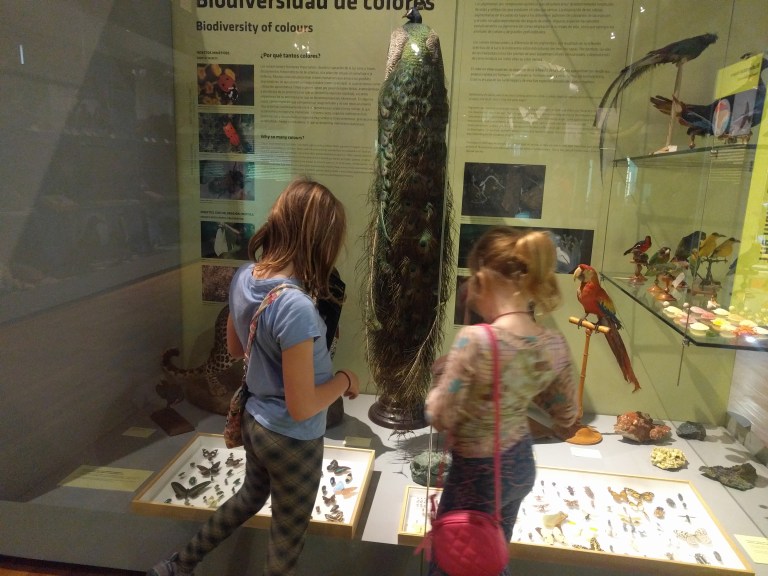
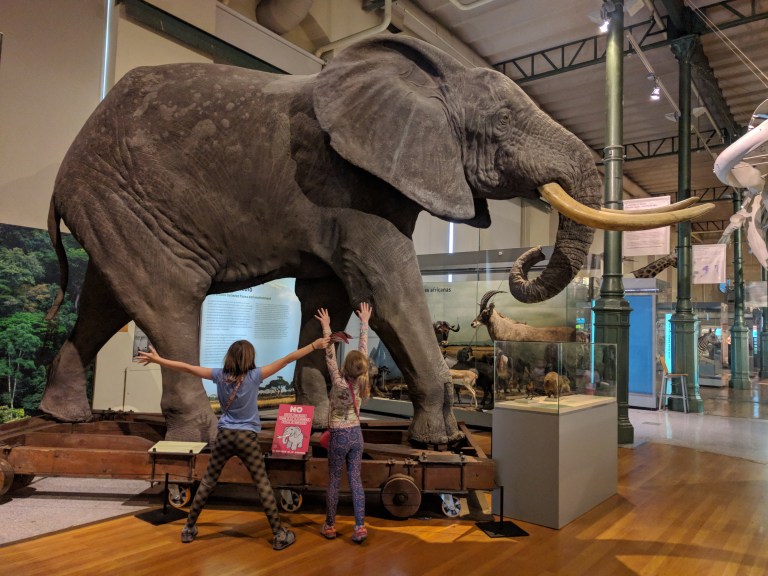
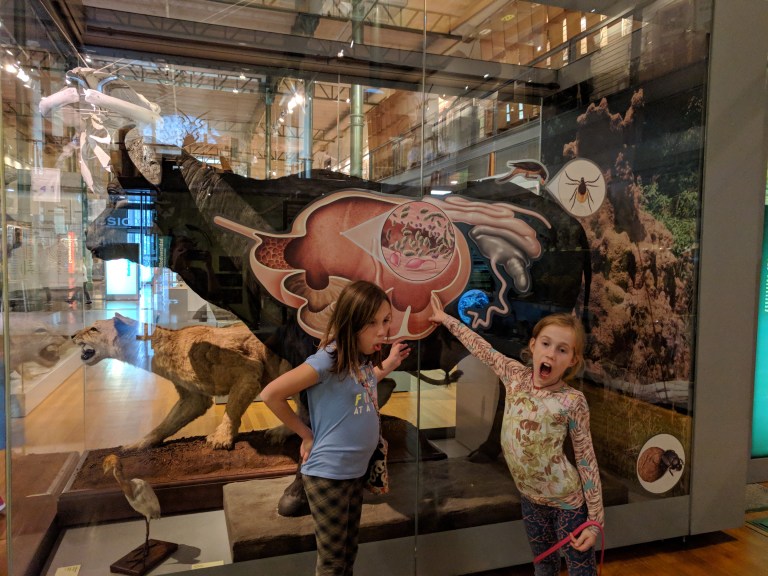
On Wednesday, we went to the Madrid Natural History Museum. This museum was very well organized and I would definitely recommend it to anyone visiting Madrid with kids. Within the first exhibit, all about biodiversity, there were three distinct sections. The first section was about Earth’s biodiversity. We learned about different habitats and different animals that live in each habitat as well as about symbiotic relationships and food chains. The second section was about adaptations. There was a really cool case showing different bird beaks and explaining why each type of beak helped the bird to fill a different niche in the world. The third section was about endangered species and extinction. We learned about the IUCN red list and talked about the different levels that a species can be classified as – extinct, extinct in the wild, critically endangered, endangered, vulnerable, near threatened, and least concern. We talked about how not every species has been evaluated, and some of the reasons why animals are going extinct. The girls decided at the end of the visit that they wanted to create their own imaginary habitat with different species to fill it that have all adapted to the imaginary habitat.
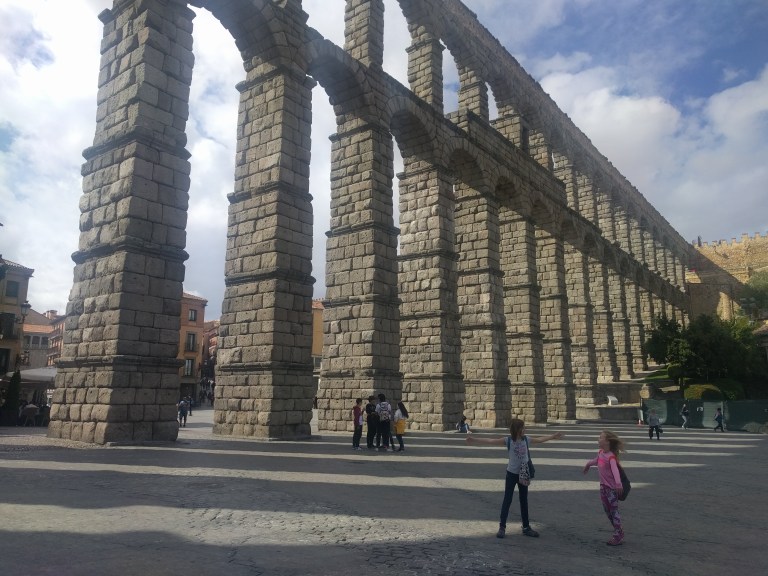
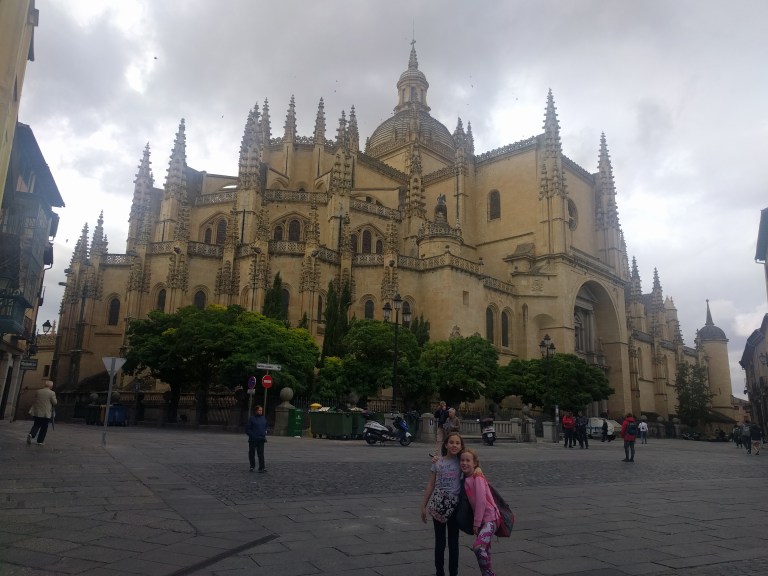
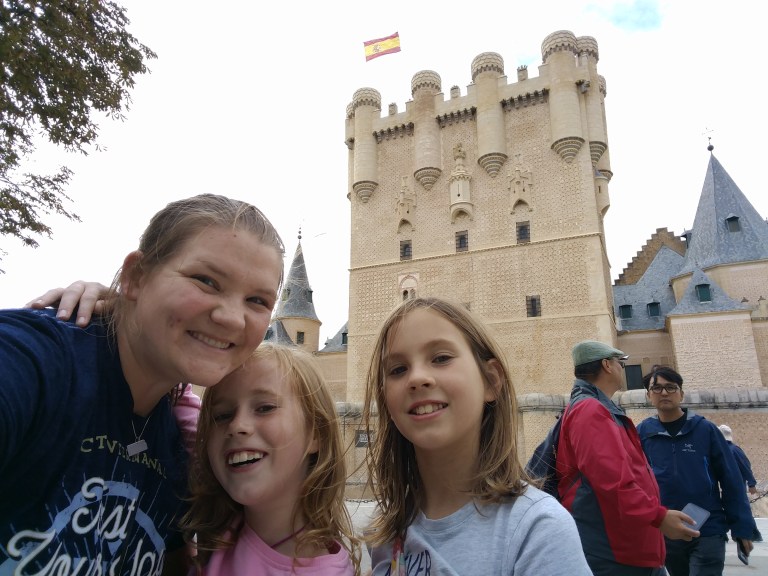
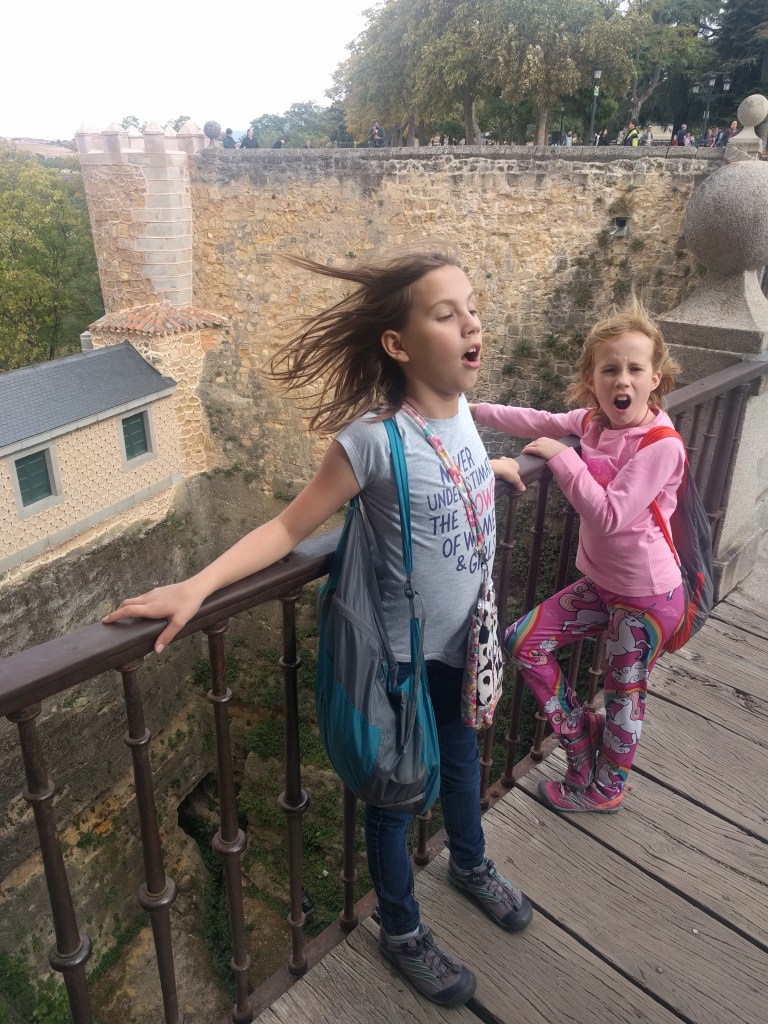
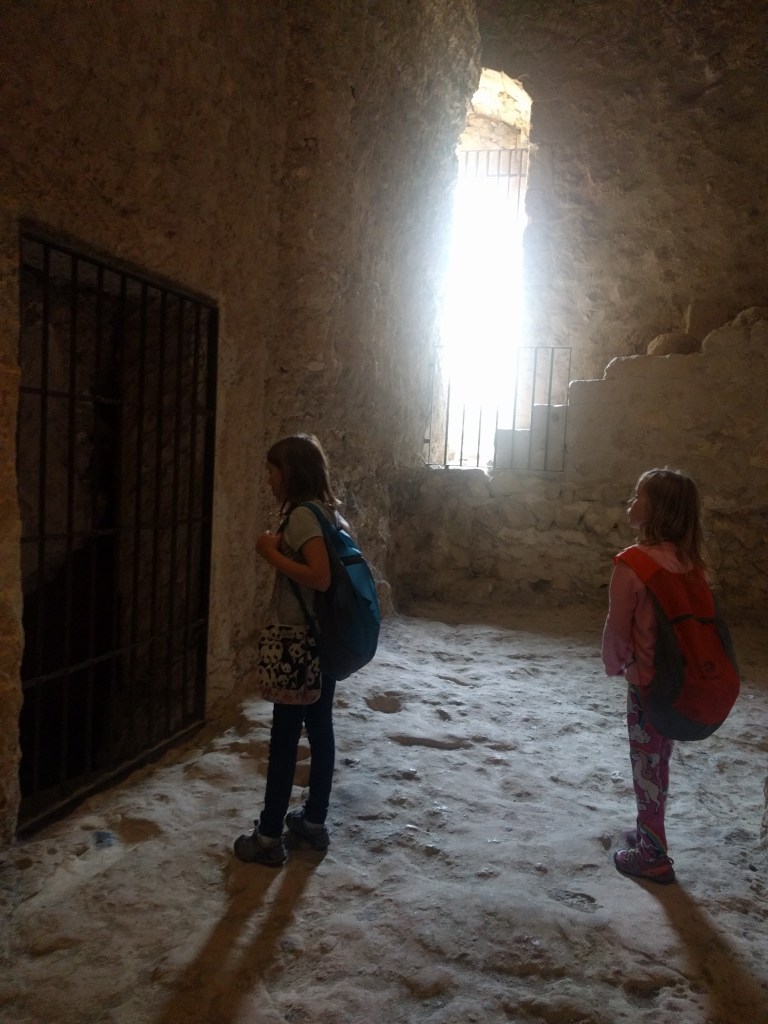
We decided to leave Madrid for the afternoon on Thursday and visit a medieval town nearby called Segovia. Segovia is beautiful and had incredible historical buildings all over town. When we first got off the bus, we were right by the aqueduct of Segovia. This gorgeous aqueduct was believed to have been built by the Romans somewhere between 50 BC and 30 AD. After looking at the aqueduct for a little while, we began walking through town toward the Alcázar. On our way across town, we walked past the stunning gothic cathedral from the 16th century. One of our goals when visiting the Alcázar was to learn about the difference between castles and palaces. We discussed the drawbridge and defensive walls as examples of differences marking castles as fortified for defense. Once inside, we had the chance to go to down to the castle foundations, which are believed to have been created by the Romans. The rest of the castle was created in medieval times, with the ceilings being recreated after a fire in the 1800’s. The girls loved visiting a castle and have asked that we explore more castles in the future if possible.


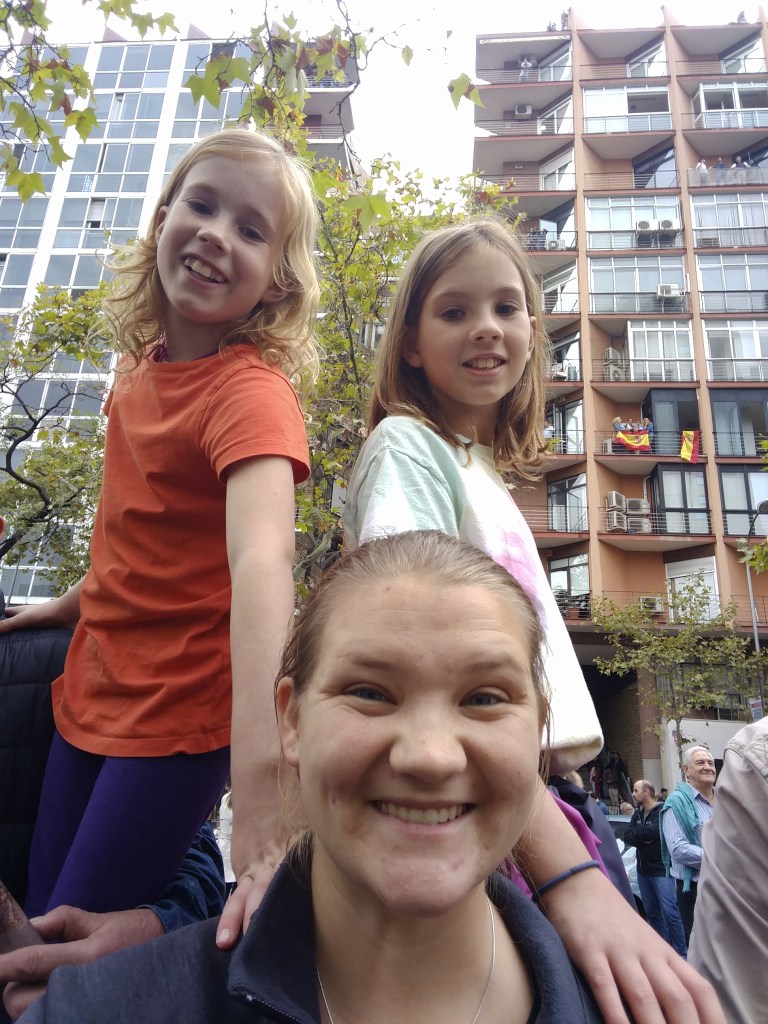
Our original plans for Friday consisted of spending the whole day at the Madrid zoo. However, we found out that Friday was a national holiday in Spain and changed our plans to include some Spanish National Day festivities. Spanish National Day is fascinating, because depending on who you ask the holiday is celebrating different things. We were told both that it was the Spanish version of Columbus Day and that it was the final day in a religious celebration to honor the saints. Either way, the people in Madrid were so fun to watch at the festivities. Thousands of people showed up for the parade. Most people had a Spanish flag wrapped around themselves or were waving a Spanish flag in the air. Finding a spot was very challenging, but a very kind man allowed us to share his family’s space. The girls had a hard time seeing, so he helped them climb up on the sidewalk railing where they could hold on to my shoulders and see over the first layer of crowd. The Spanish National Day parade was a military parade; it included parachuters, tanks, police vehicles, firefighting vehicles, soldiers walking in formation, soldiers on horseback, soldiers with skis and even a group of what Audrey swears were goats. The girls had a wonderful time even though we did not get the chance to see the King and Queen of Spain like they hoped.
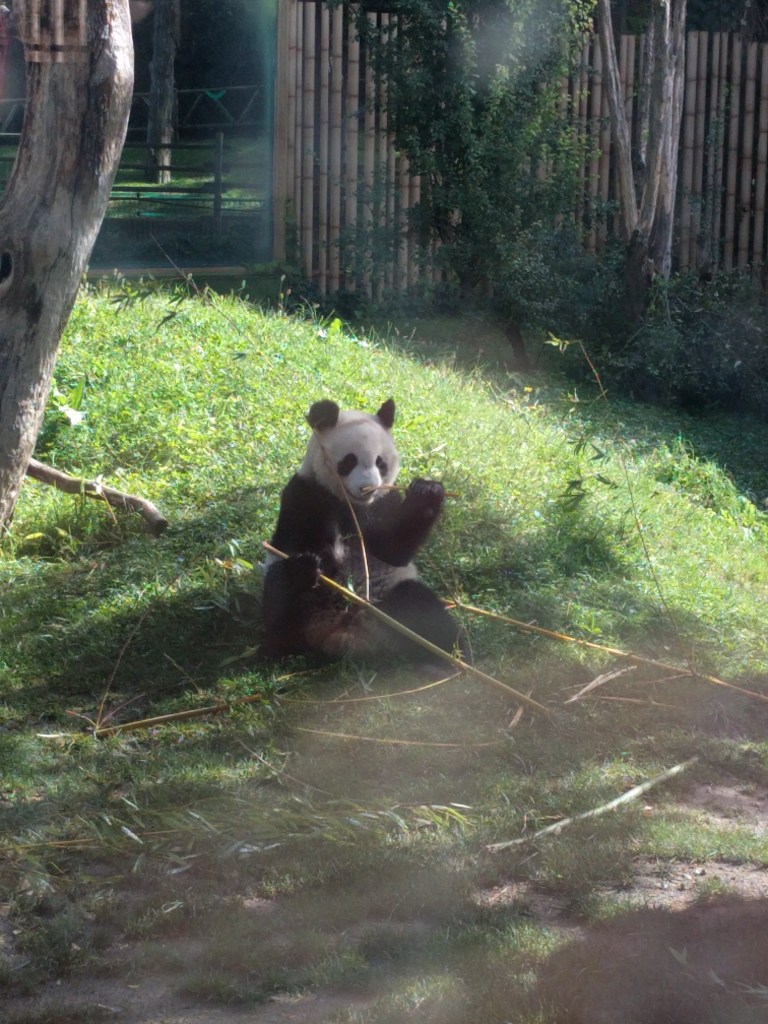
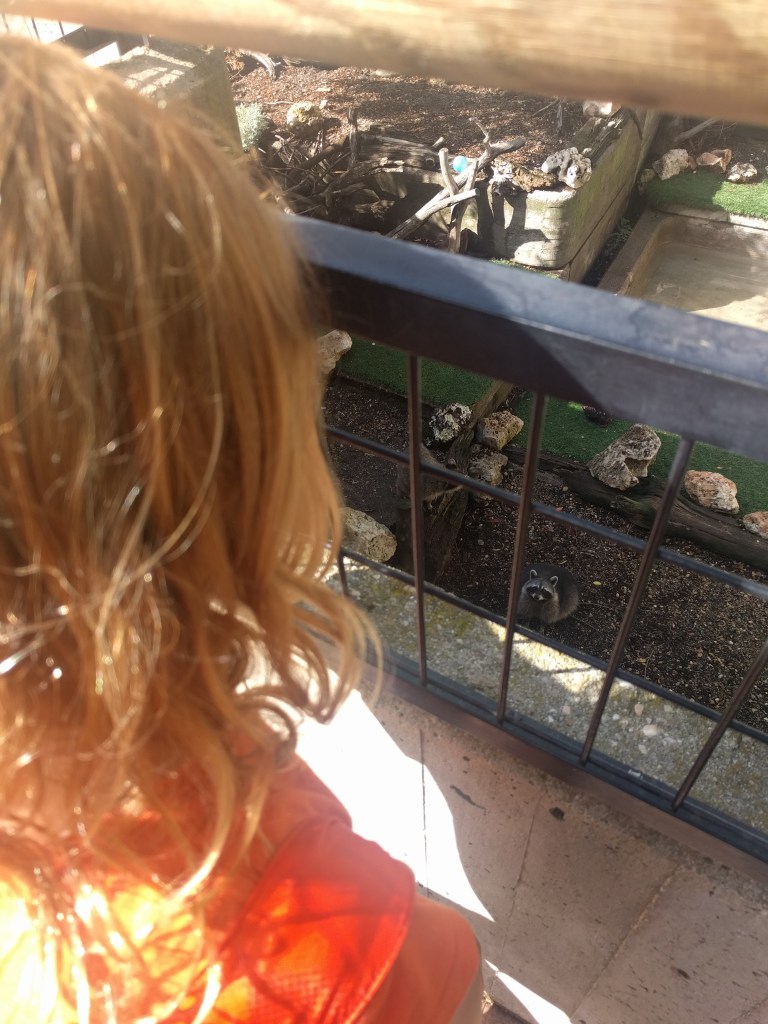
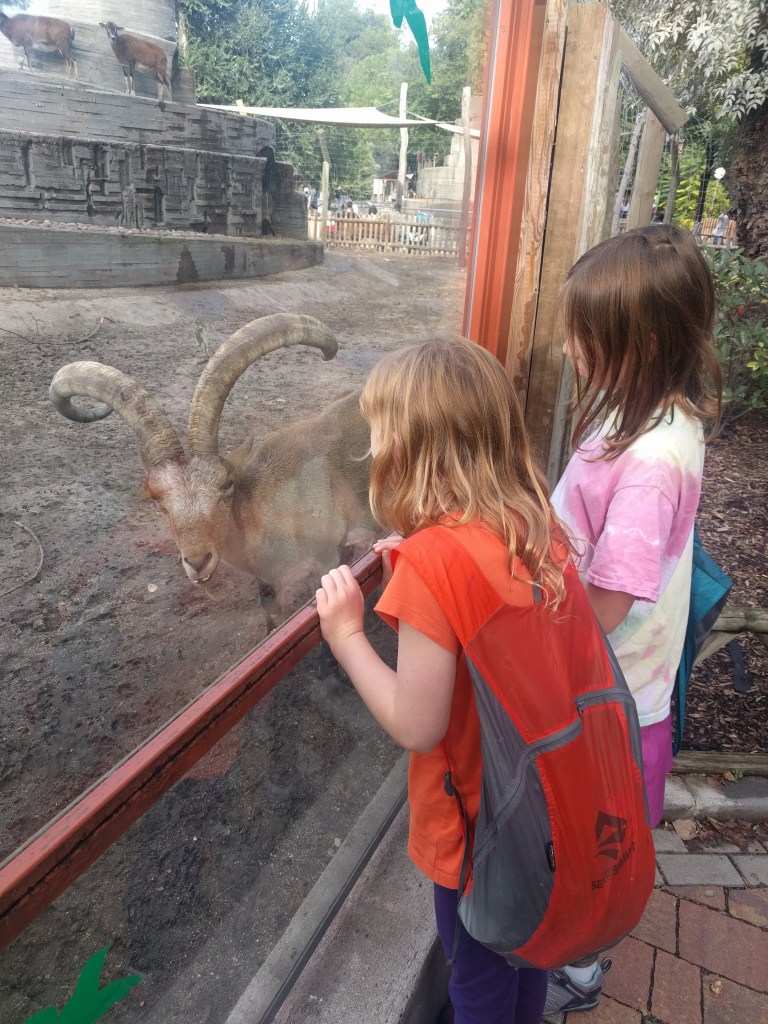
After the parade, we made our way over to the zoo. The zoo was a very enjoyable time, with a large variety of species. The big hits from the day were pandas, koalas, baby elephants, Iberian wolves, and dolphins. We also loved the goat with the terrible underbite, because his teeth looked very similar to one of my dog’s teeth. The girl’s dad, Josh, joked the night before that we should try to find some wild animals like raccoons at the zoo, and funny enough there were indeed raccoons at the Madrid zoo. We had the chance to watch a dolphin show and I got to share with the girls what I know about the animal training having purpose beyond entertainment. The girls also loved getting to utilize their new knowledge about the IUCN red list categories to discuss how each species was doing in the wild. The only negative experience we had was that zoo wide there seemed to be a acceptance that people would feed the animals, even though the signs asked for the animals not to be fed. There were a number of times that we watched people throwing food into the enclosures – raccoons, elephants, bears and wolves. This was a very different experience than we are used to, and was pretty uncomfortable. Luckily, the girls were good sports about moving on to look at other enclosures when people started throwing in food. While unfortunate, this provided a great teachable moment about natural animal diets and human interference and we enjoyed ourselves even so.
Things I’ve learned in Madrid:
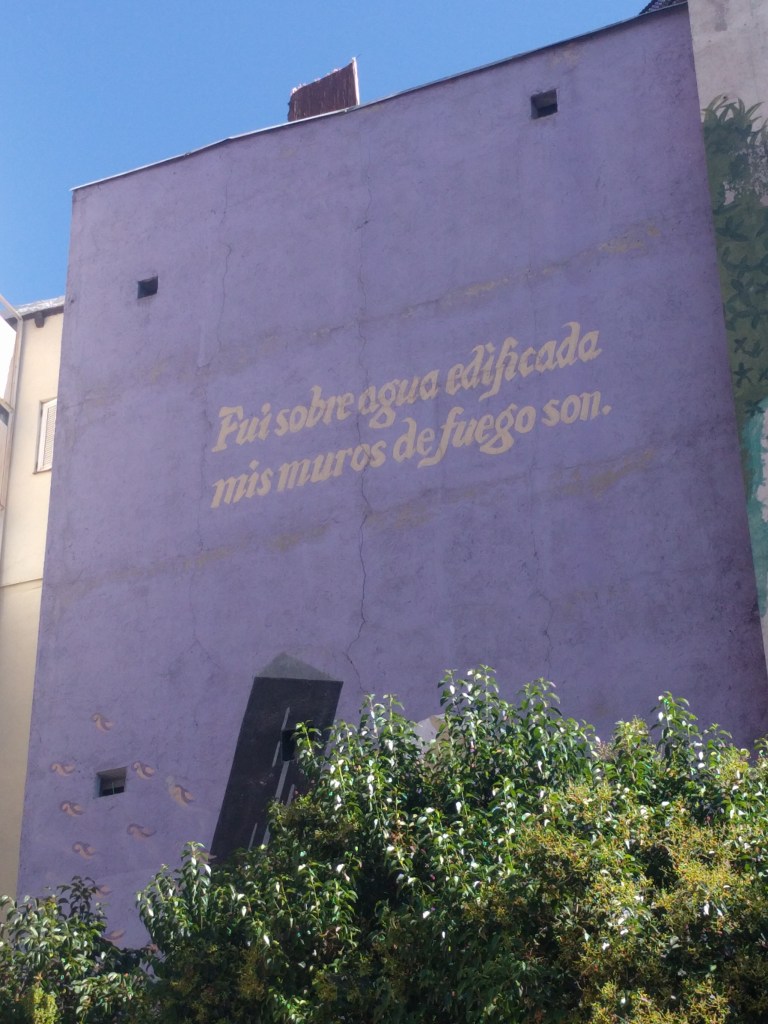
- The city motto of Madrid is “Fui sobre agua edificada, mis muros de fuego son. Esta es mi insignia y blasón” which means something to the effect of, “On water I was built, my walls are made of fire. This is my ensign and coat of arms.”
- The original walls around Madrid were made of flint, so that when arrows hit the walls the arrows would cause a spark, hopefully frightening any attackers away from the city. Hence the city motto.
- Madrid became the capital of Spain in 1561, because the king wanted to separate church and state. He left Toledo as the center of religion in Spain, and moved all government business to Madrid.
- Spain was under a dictatorship from 1936 to 1975. Hitler helped Franco come to be in charge of Spain.
- Bullfighting is still a thing.
- Lunch for Spaniards is not until around 3pm. Dinner is not until after 9. Many dinner restaurants are closed until 7:30 or 8:00pm.
- According to the Guinness Book of World Records, Madrid has the oldest continuously running restaurant in the world. It is called Sobrino de Botín and was founded in 1725. When we tried to get a reservation, the earliest dinner time available was 11:15pm.
- Madrid has passed between Muslim and Christian leadership multiple times throughout history. There are a ton of convents throughout Madrid, including one that smells like baking cookies when you walk nearby. There are also many buildings that look much more Middle Eastern.
- Mailing a package from Spain to the USA is far more complicated than mailing a package from any other country we have been to so far.
- Far fewer people in Madrid speak English than the other cities we have visited so far.
- There are fruit stands all over Madrid that have very fresh fruit.
- Spanish from Spain and Spanish from Mexico sound absolutely nothing alike.
- Dominos Pizza in Spain has a pizza called Kansas pulled beef.
- Supposedly, the origin of tapas was the small dishes of free food that were provided free with purchase of a drink. The more drinks you order, the better your tapas get.
- Raccoons are an invasive species in Spain.
While we had a ton of wonderful experiences in Madrid, overall, it was definitely our hardest two weeks of the trip yet. We are looking forward to having a new city to explore! Next stop: Lisbon!
 Tales of a Traveling Teacher