
We love Lisbon and wish we could have stayed longer. Even exploring for two weeks, there were still so many things that we did not get to see this trip and hope to see in the future.
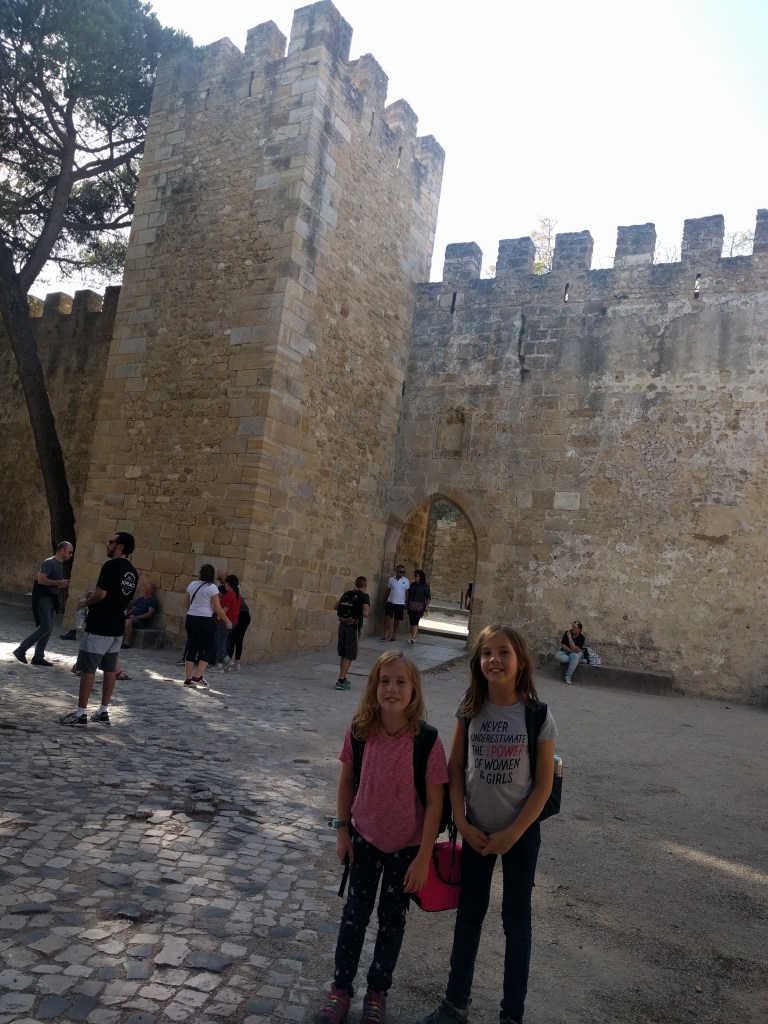
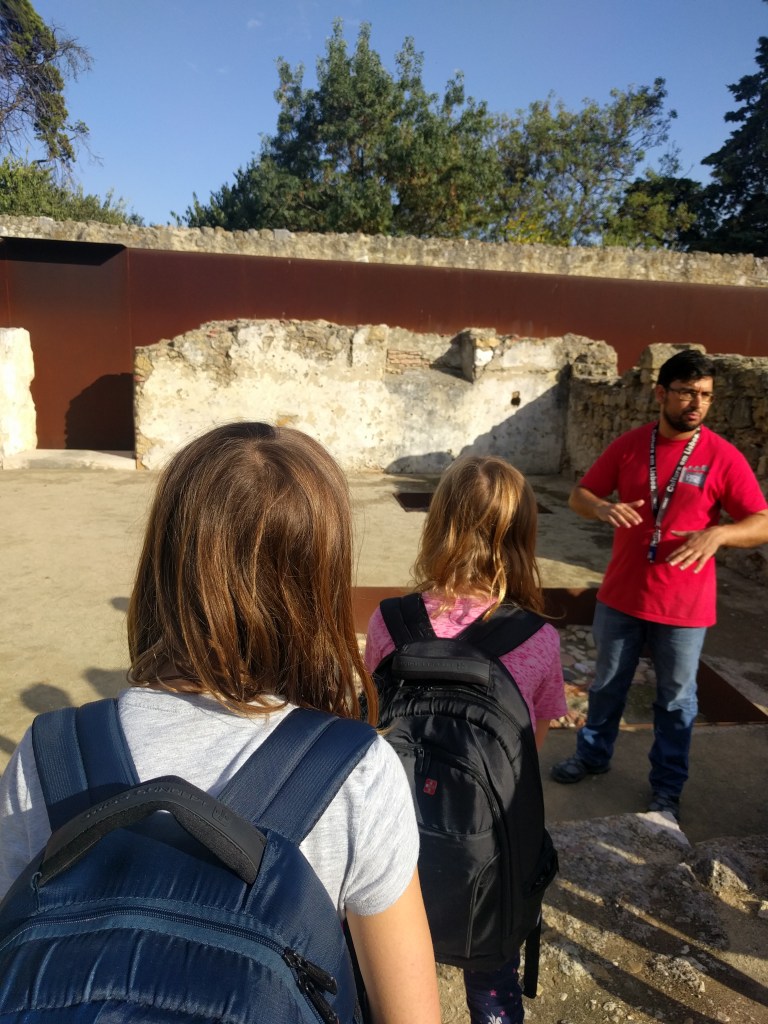
On Monday, we continued our castle exploration by visiting the Castelo de Sao Jorge in Lisbon. The Castelo de Sao Jorge has a long history – from early settlements, to fortress, to royal palace, to military barracks after the earthquake of 1755. We were able to see the version of the castle that had been restored for tourists, but the part we enjoyed most was getting to see the archeological dig sites next to the castle. We arrived to the archeological site just in time to join a guided tour which allowed us to go within the dig sites rather than just observing from the sides. The girls were so excited to get to go past the ropes! The deepest dig site was a house from after the Phoenicians began visiting Portugal. We learned that the Phoenicians were the people who brought right angles in houses to the peninsula and that before the Phoenicians came all of the houses in the area where built in a round shape. The next site we were able to see was from when the Christian royal palace was situated on top of the hill. We could see the original flooring as well as where the kitchen and store rooms were. Finally we got to go inside the ruins of an Islamic house. The sites were very well preserved because over time the ground rose and covered the settlements. When the site was used as military barracks, the yard was situated above where the ruins were found. Audrey and Maurene’s favorite part of visiting the archeological site was going inside the Islamic house and seeing the walls still have some decoration on them.


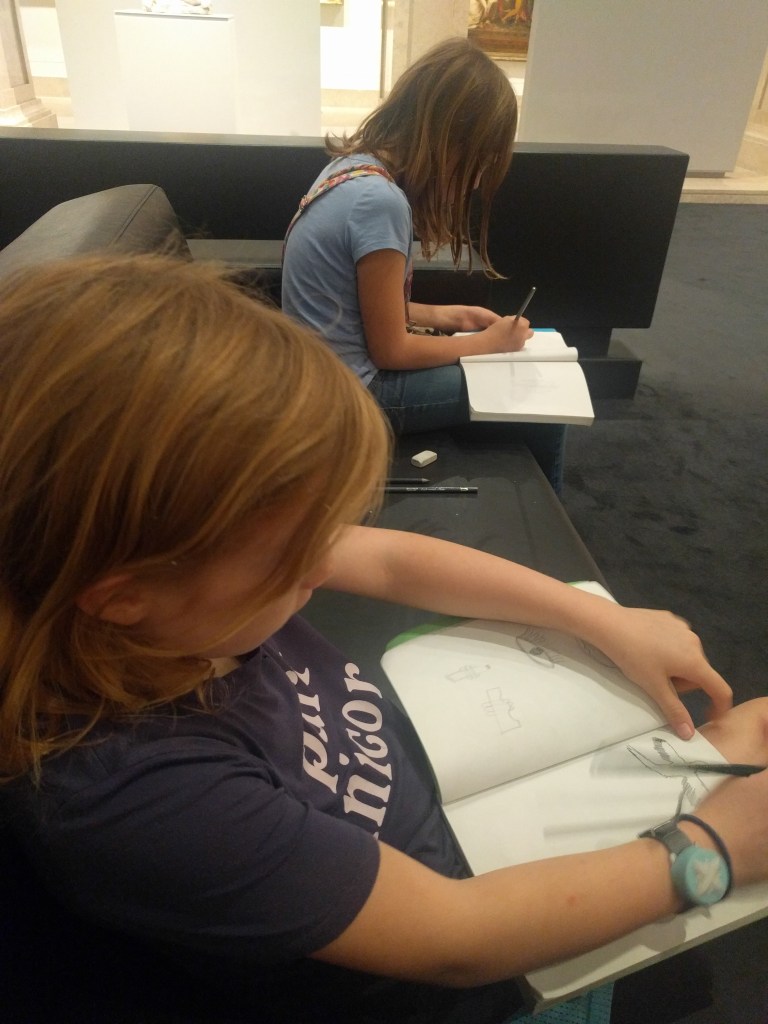
On Tuesday, we visited the Museu Nacional de Arte Antiga. It was a very large museum, so we decided to focus on the paintings and sculptures from Portugal. We learned that many of the works of art we saw were created to decorate altars by order of the king and that they were hidden behind curtains most of the time, only shown for festivals and religious events. Viewing the art led to many interesting conversations about the religious stories behind many of the pieces, especially about Jesus’s crown of thorns. We also enjoyed comparing the ways each artist depicted some of the common people from the stories such as Jesus, Mary, John the Baptist and St. George. Maurene was begging to sketch from the moment we walked in the museum, so after browsing for a little bit for some inspiration we settled in to sketch. Audrey and Maurene are becoming much more confident with their ability to sketch without worrying about perfection and are getting more excited to share about their drawings. It is so much fun to hear about their inspiration and interpretations of art. We also tried Pastéis de Belém! Pastéis de Belém are little egg tart pastries that are made from a secret recipe developed in a monastery in 1837. We decided we liked them better with cinnamon and sugar than we did plain.




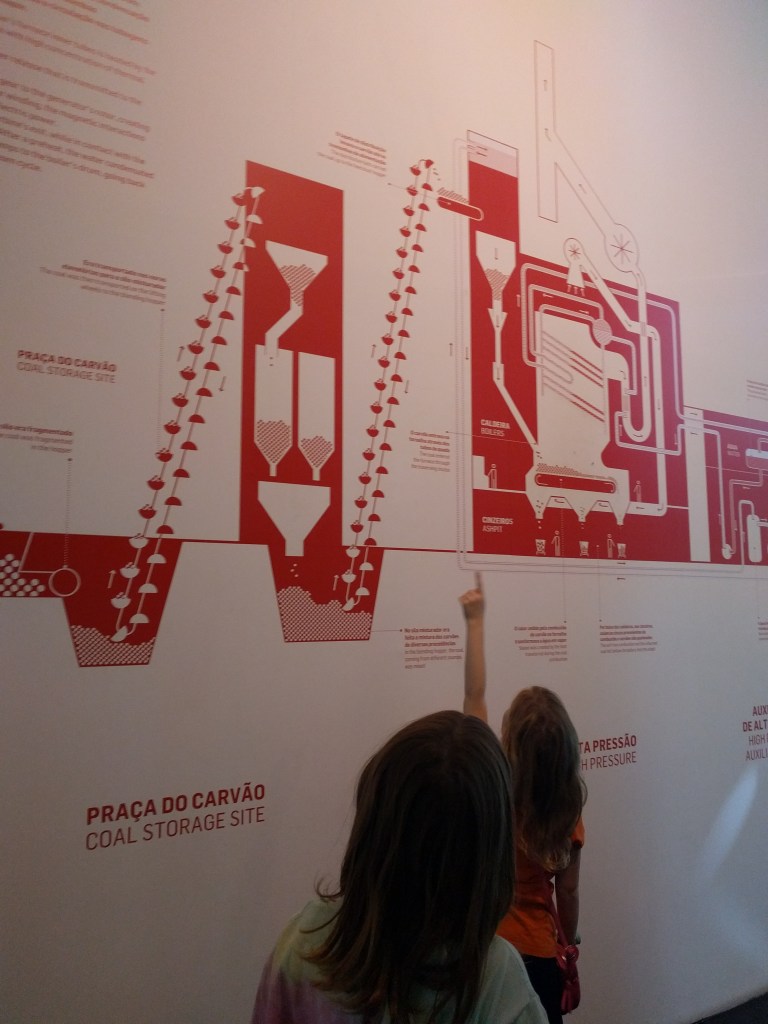
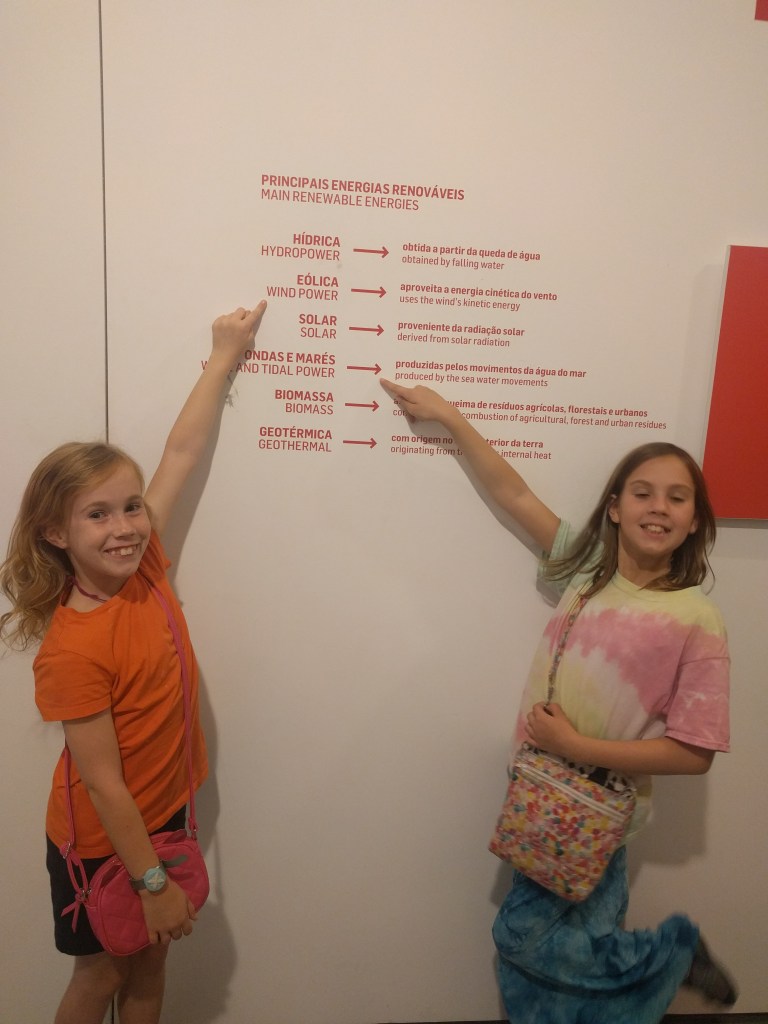
Wednesday we learned about different sources of electric power by visiting the Electricity Museum, situated in the old Lisbon power plant. We toured the old plant and learned about the process of using coal to heat water which could then be turned into electricity. We had the chance to learn about the different jobs in the power plant and about the working conditions of the employees in different areas. The girls loved watching footage of employees carrying the coal from boat to dock by balancing on wooden beams with a basket of coal on their heads. They also were astounded to learn about how hot it would have been for the workers underneath the power generators who were in charge of coal redistribution once it was finished burning. After learning about how the plant was originally used, we moved to the next section and learned about cleaner forms of energy production. Maurene decided that she wants to invent a machine that can generate power from ocean waves while cleaning the trash out of the ocean. I really hope she does invent such a machine. The girl’s favorite part of the museum was the section at the end where they were able to learn about circuits and electricity through play. We learned about what can and cannot conduct electricity, connected our hands to complete a circuit and learned about electrical safety. The Electricity Museum was definitely a creative use of an old power plant and was very educational and fun.

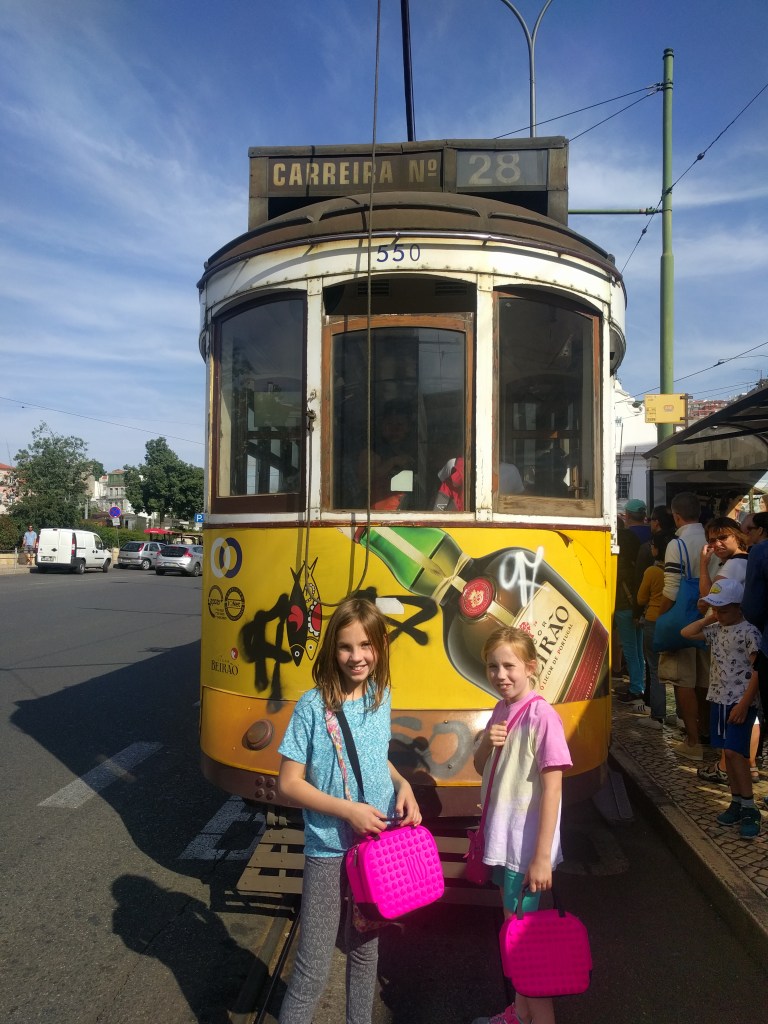
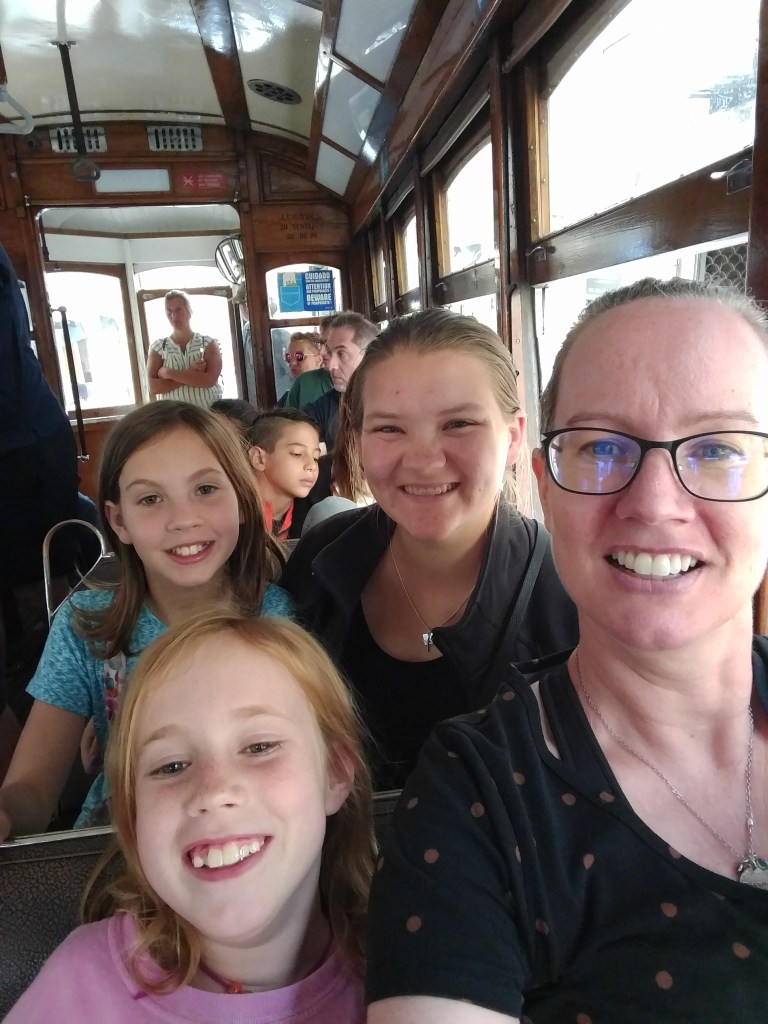
Thursday was a full day of Lisbon activities. Kris was able to join us for the morning, and we spent it riding the iconic tram 28 around town. Tram 28 has wonderful views of the city, and the tram cars are original from the 1930’s. We learned that the brakes and electrics were upgraded in the 1990’s. We did have to wait in line for quite a while at the first stop, but had great seats to see Lisbon from in the tram once we got on. Our favorite part of the ride was when the streets get incredibly narrow. If we were to reach out of the tram, we definitely could have touched the buildings on either side of the streetcar. After riding across town one way, we noticed that the line to go back from the stop by the cemetery was virtually nonexistent, so naturally, the girls asked if we could please ride it the other direction too. So that’s exactly what we did. We learned that no matter which stop you get on, everyone must vacate the tram at the beginning and end of the line each time. We also learned that there were originally 24 tram routes, but there are only five tram routes still in use.
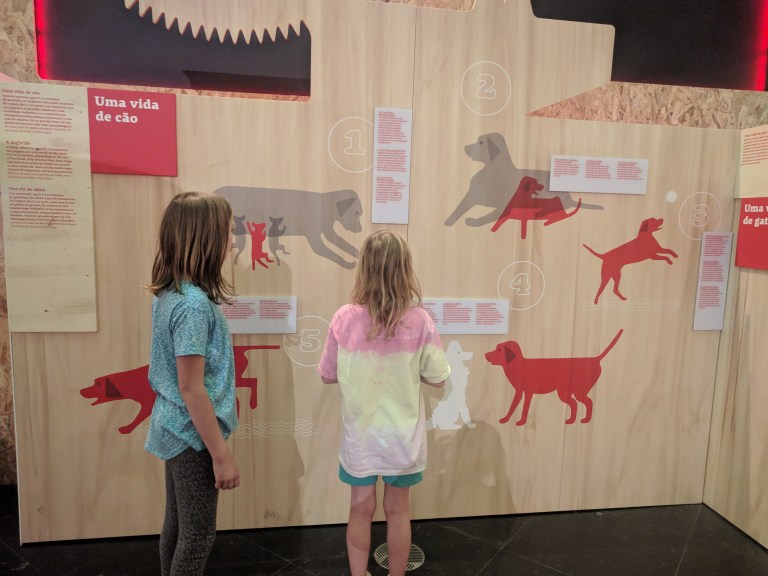
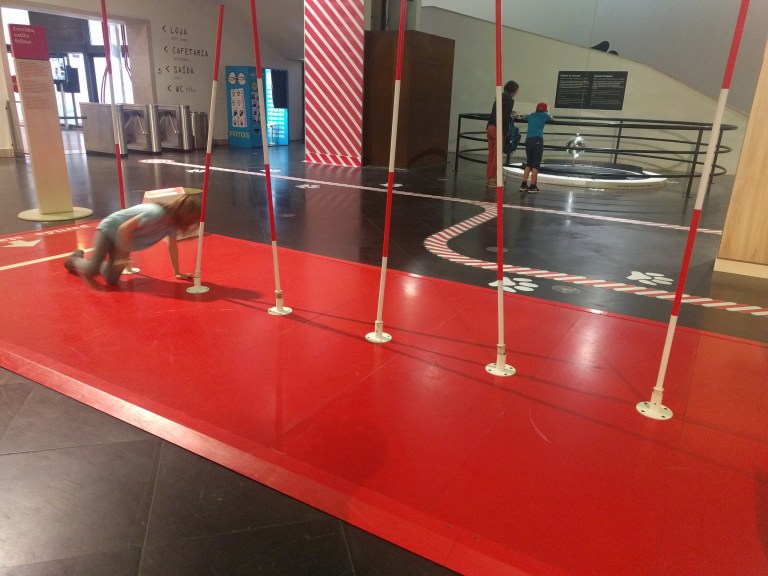
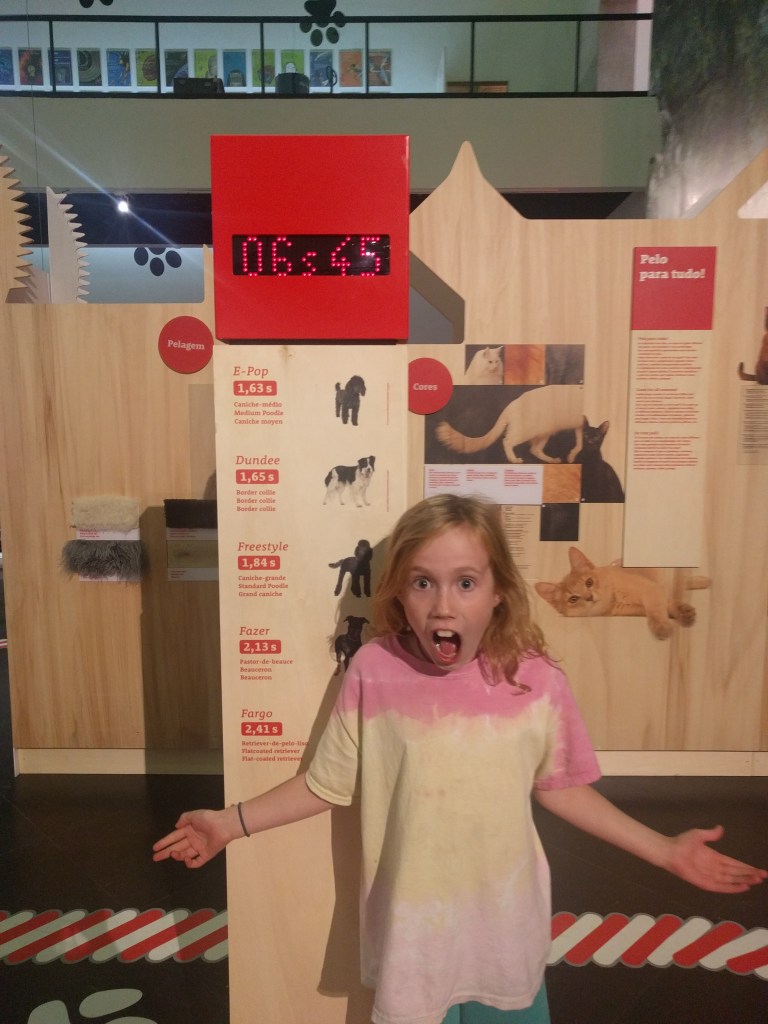
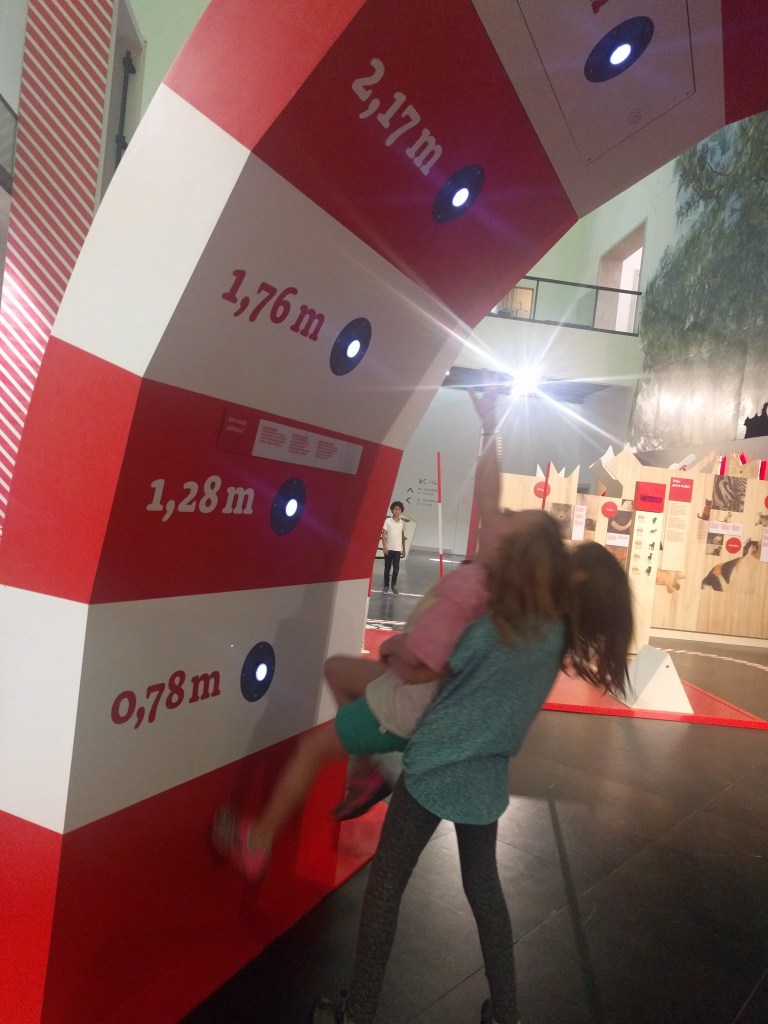
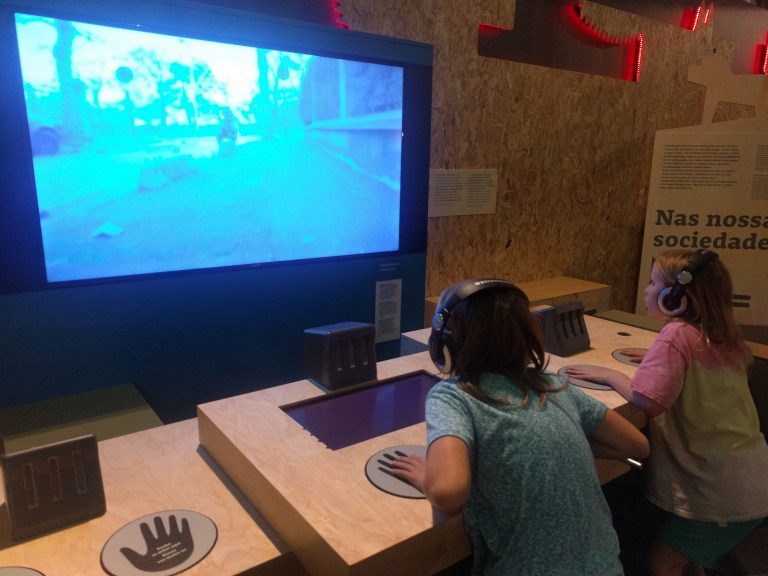
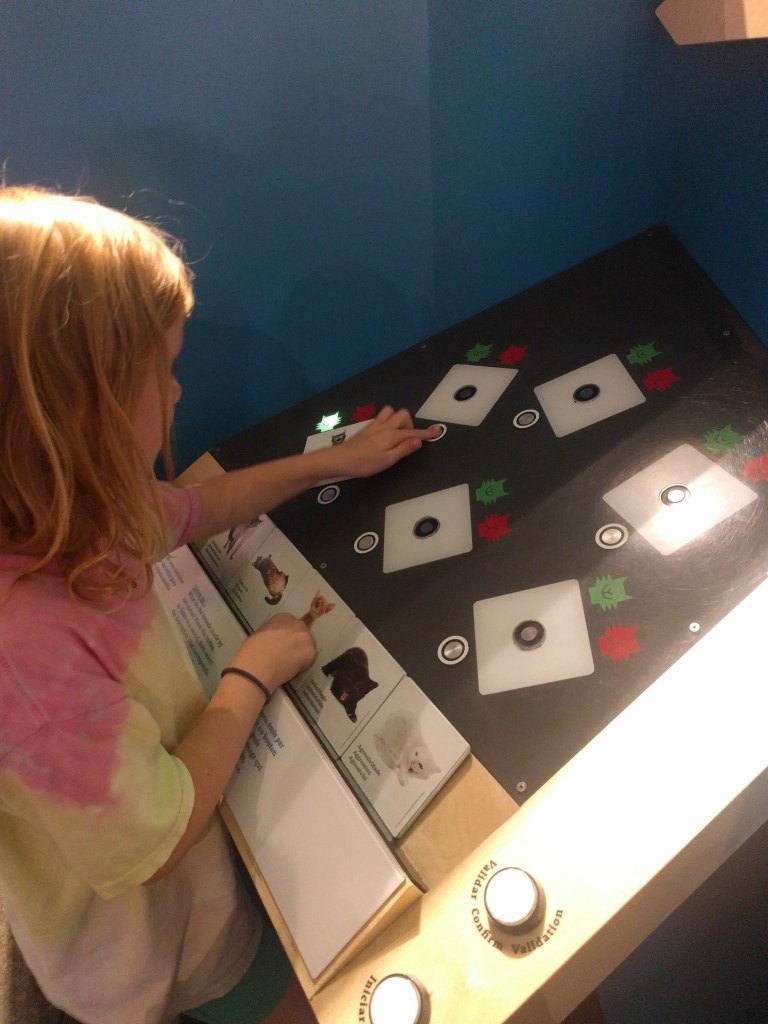
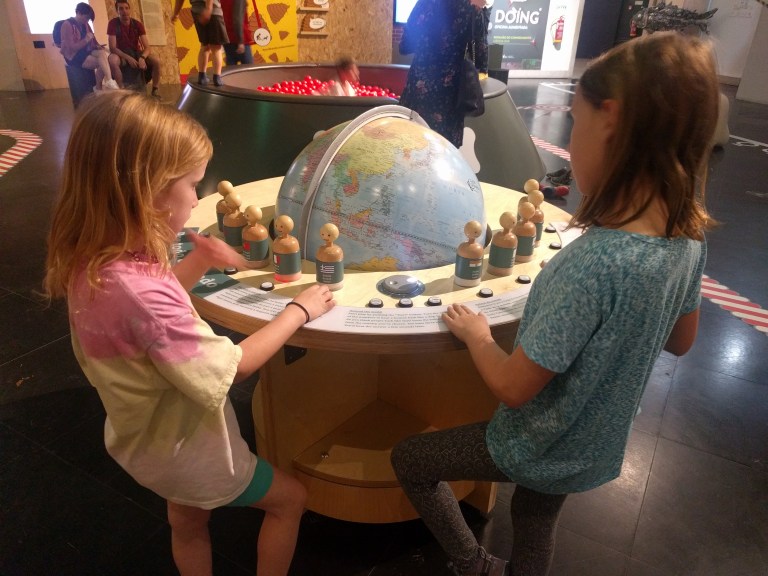
In the afternoon on Thursday, we went to the Pavilion of Knowledge. The Pavilion of Knowledge is a fantastic kid’s science museum. We spent most of our time exploring the section about the science of dogs and cats. We learned about dog and cat life cycles, history, breeds, emotions and behaviors. We explored how people imitate dog and cat sounds across the globe, raced a dog agility course against the times of winning dogs, tried to jump as high as a cat, played dog and cat breed guess who, learned the importance of spaying and neutering pets, and watched the world from a dog’s perspective, a cat’s perspective and a human’s perspective. We loved the museum, and the girls were so sad when the museum closed and they could not do the other sections. They enjoyed the Pavilion of Knowledge so much that they proposed to their mother visiting again to explore more of the museum on Saturday – which they did!

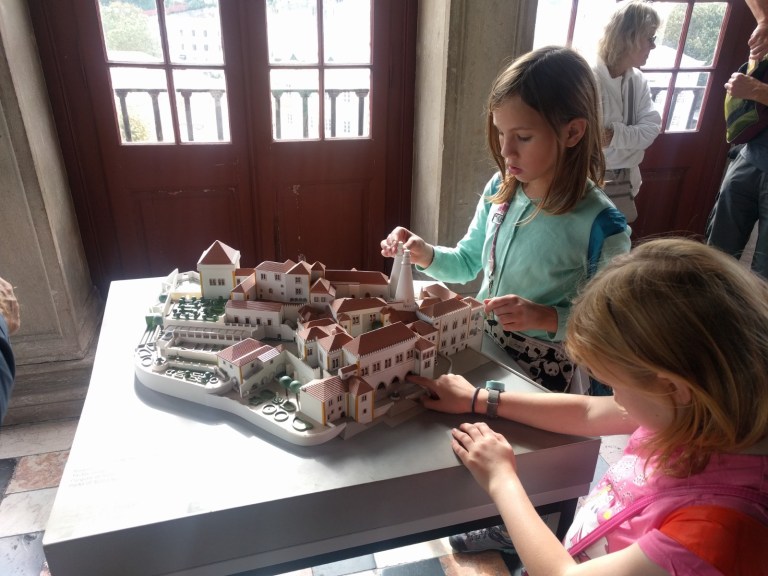
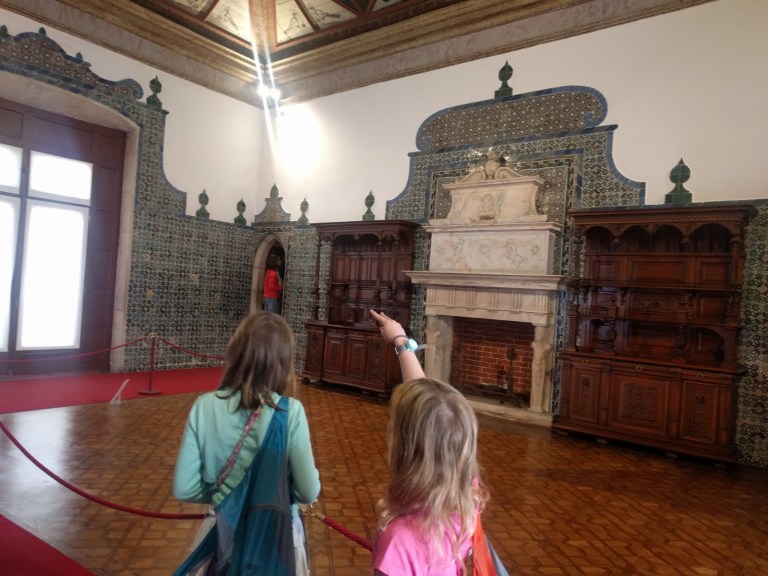
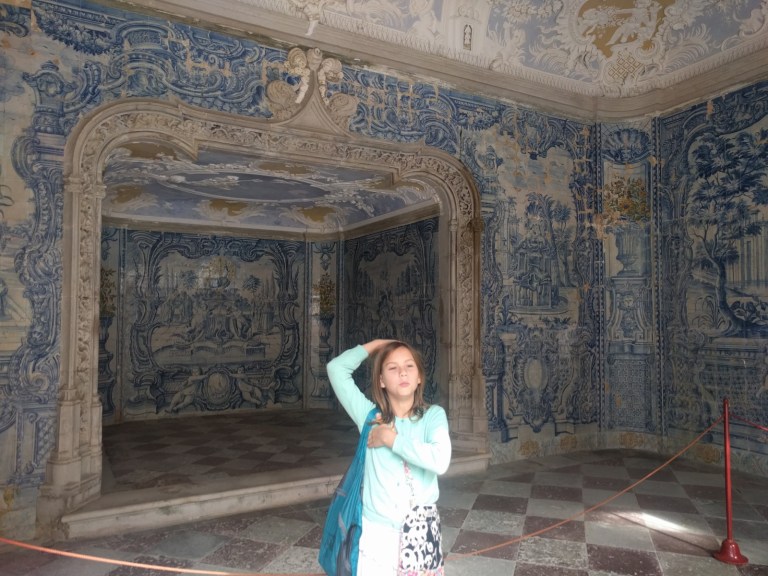
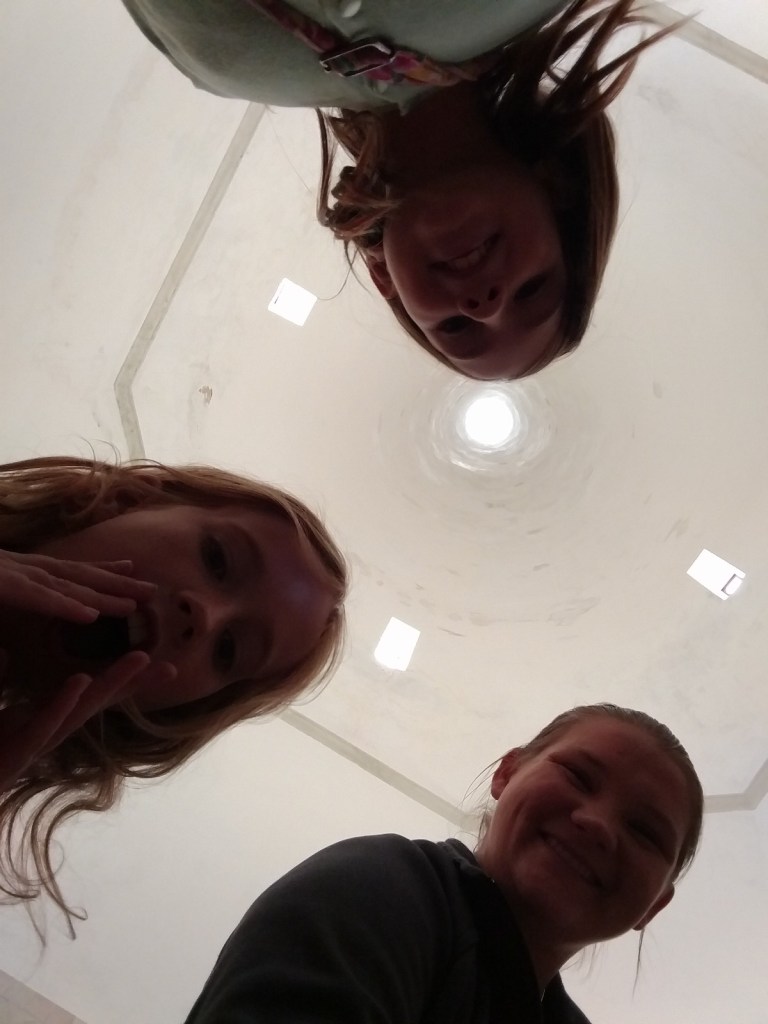
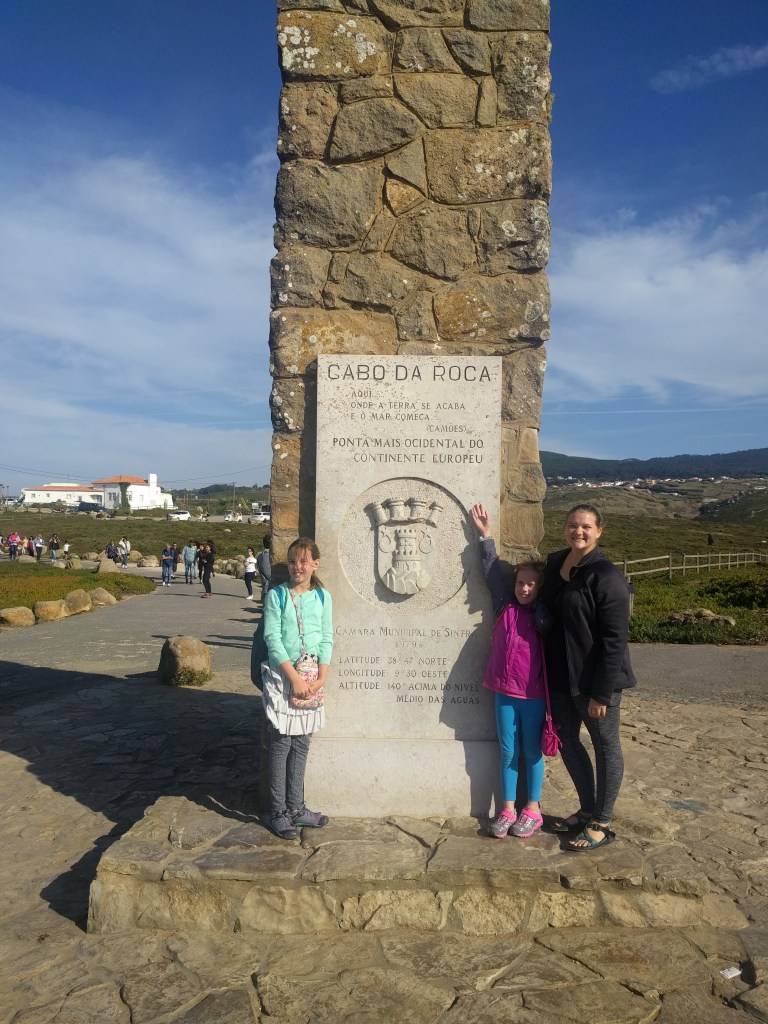
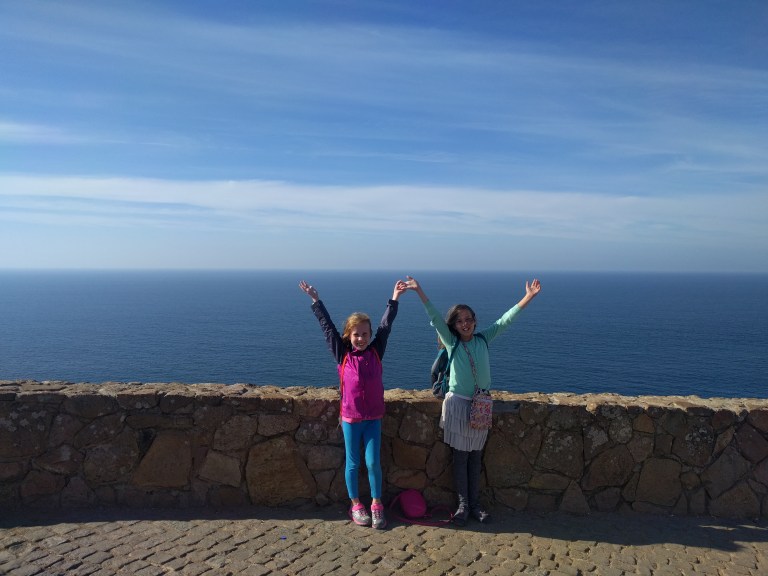
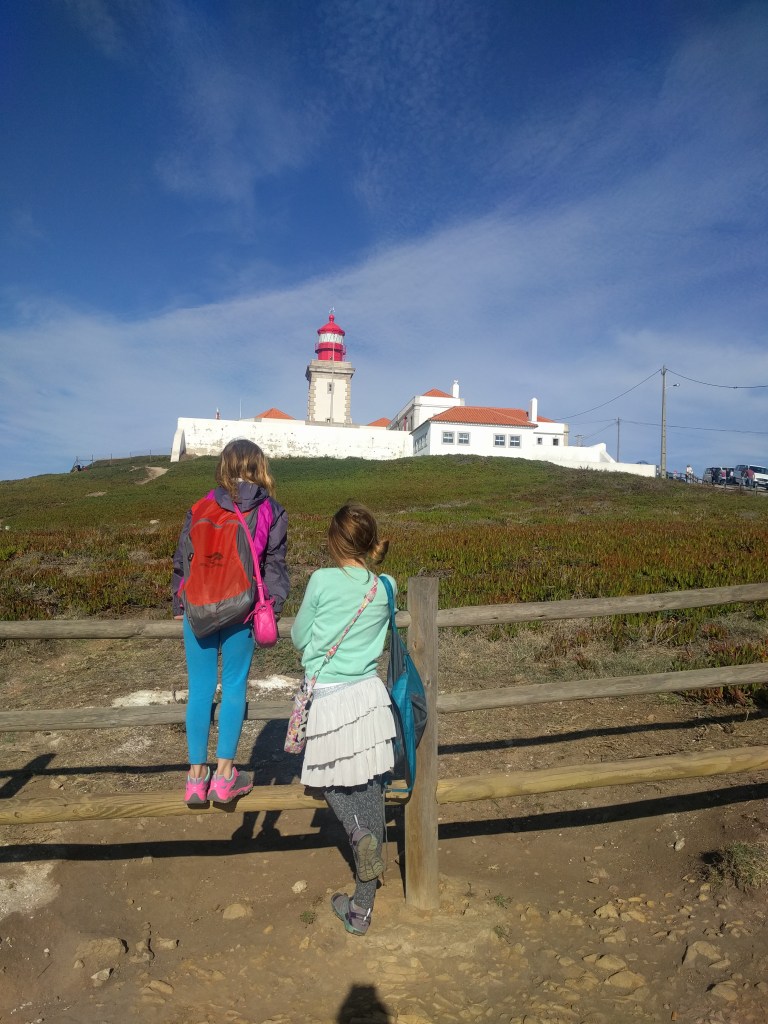
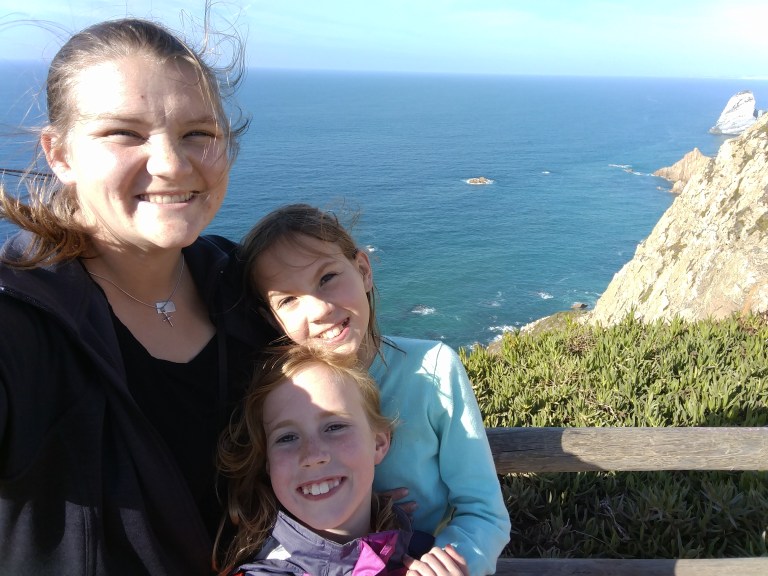
Per Audrey and Maurene’s request, we went back to Sintra on Friday. This time, we visited the National Palace of Sintra and Cabo da Roca. The National Palace of Sintra is smaller than many palaces we have visited, but had beautiful tile work and painted ceilings. Our favorite parts of the palace were the rooms with birds painted on the ceiling (one had 136 birds!), the room with boats painted across the walls and the kitchens. The kitchens were built within two the large chimneys that are iconic to the building. Audrey also thought the outdoor shower in the palace courtyard was hilarious. After exploring the palace, we enjoyed a nice lunch outside the palace before heading toward the Atlantic Ocean. Our next stop was Cabo da Roca, the westernmost point of continental Europe. The views from the cliffs were beautiful. Audrey was a little disappointed that we could not tour the lighthouse, but we all enjoyed the scenery just the same. Hopefully we can find a lighthouse to tour at some point during this journey.

Saturday was spent packing and seeing a few more sights in Lisbon, so that we would be ready to fly to our next location on Sunday!
Things I’ve learned in Lisbon:
- Lisbon is called Lisboa in Portuguese.
- Lisbon is built on a number of huge hills – some streets even are steep enough that they have street cars that are specifically used to take people up and down the hills.
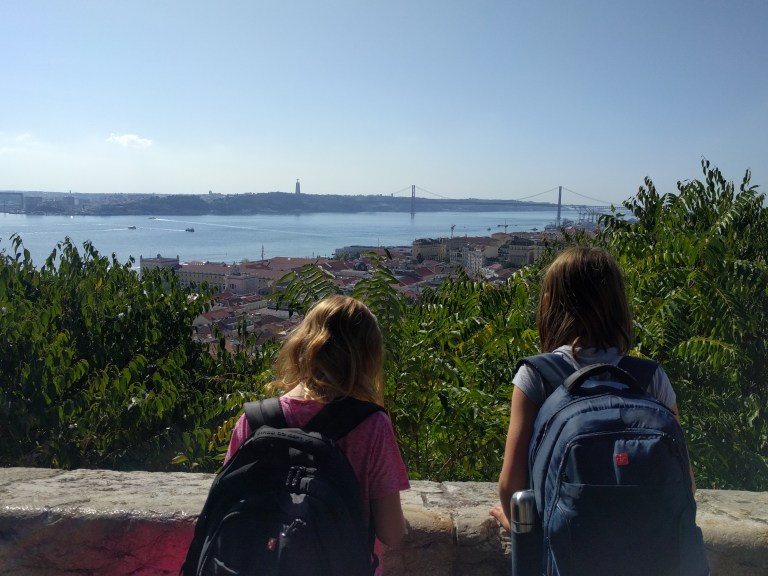
- The bridge in Lisbon that looks very similar to the Golden Gate Bridge is actually modeled after the Oakland bridge.
- The 1755 earthquake leveled 85% of Lisbon, caused a tsunami, and then part of the town caught on fire and burned for 5 days.
- One of the parts of town that was not completely destroyed during the earthquake of 1755 was the former red light district.
- The tiles across town are absolutely beautiful. The traditional colors in the tiles are yellow, blue, white and green.
- There are sardine shops everywhere. Many look like candy shops with brightly colored sardine tins stocked throughout the rooms.
- The Alfama district is named after the Arabic word for bath, as that is where the public bath houses were.
- Commerce square was the entrance to Lisbon for boats, and as such to the Iberian Peninsula.
- The weather in Lisbon is fantastic.
- Tuk tuks are everywhere in Lisbon.
- The bakeries sell what seems to be a cornbread with sugar on top. It’s actually pretty good.
Next stop: Barcelona!
 Tales of a Traveling Teacher