
Thursday morning began with our group splitting and going to two different airports. While Kris, Audrey, Maurene and I were in Seoul, Josh headed back to the United States for a few weeks. Seoul is a 2.5-hour flight away from Tokyo, and has two airports. We flew in and out of Incheon airport, which is a beautiful airport an hour outside of Seoul. Upon arrival, our Airbnb hosts were waiting to pick us up and drive us to the house! I learned during this drive that I don’t really ever want to drive in Seoul, or necessarily ride in a car on the highways near Seoul again. There’s so much merging into tiny spaces and honking! I was particularly excited about getting to Seoul, because after getting settled in to the Airbnb, I went to go see my dad! My dad had a business trip to the Philippines and was able to schedule a 48-hour layover in Seoul on the way! After we both found our way to his hotel, we went out and grabbed a coffee and walked around exploring the area for a little while before we each needed to sleep.
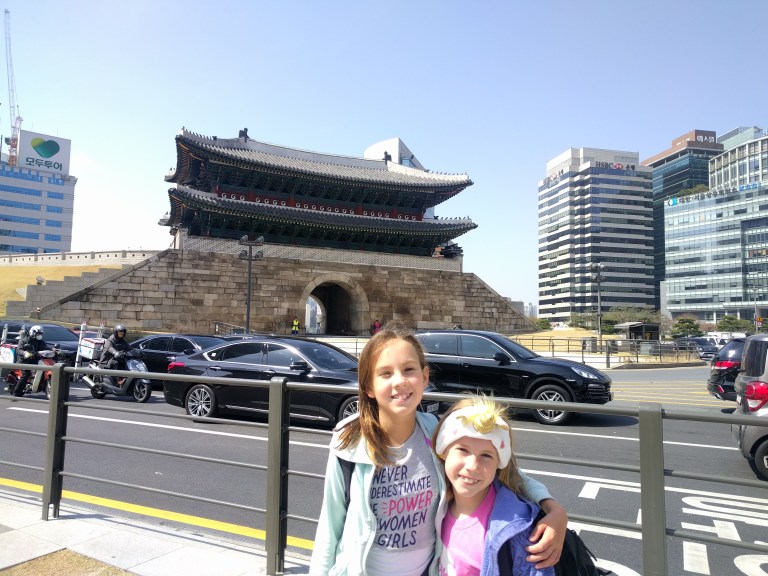
Audrey, Maurene and I began Friday as a typical school day working at the local Starbucks. During the afternoon, my dad joined us as our “exchange student.” We enjoyed eating lunch by one of the old city gates before taking a bus tour to see Seoul. There were three different bus tour routes offered, but we chose to take the Downtown-Palace-Namson tour. On the bus tour we saw several places that we planned on visiting during our stay in Seoul, including three different royal palaces, the Korean War Memorial and the National Museum of Korea. We also saw several places that we added to our “next time” or weekend activity lists, including the Namsan Seoul Tower and several markets.
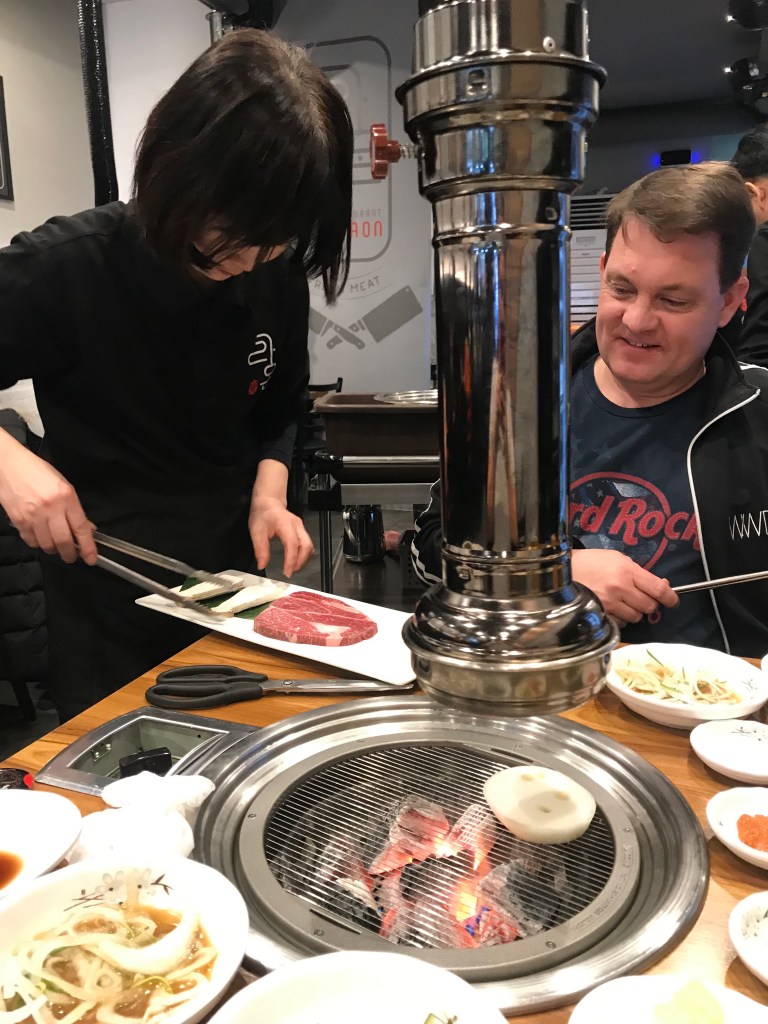
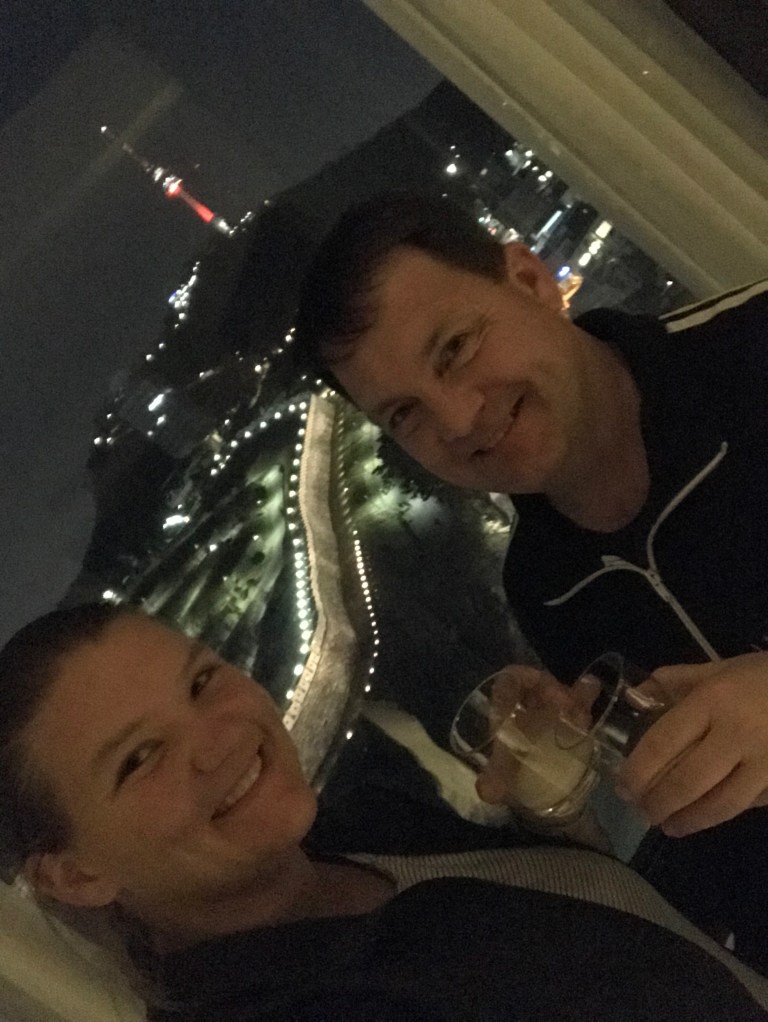
After the regular school day ended, my dad and I dropped the girls off at our Airbnb and headed back to city center to grab dinner. We ended up eating at a Korean barbeque restaurant in a part of Seoul called Myeong-dong. The food was wonderful, as was the experience. We ordered steak and marinated beef, avoiding whatever meat translated as “domestic” according to my phone. Our food was cooked for us at our table and the waitress/cook was hilarious. She definitely wanted us to eat the food in a particular way, and wasn’t hesitant to take our chopsticks and mix the food the way she thought we should eat it. I absolutely would recommend to anyone coming to Korea to go have Korean barbecue, because it was a wonderful experience. After getting back to the hotel, dad and I tried Makgeolli, a traditional Korean rice wine. I thought Makgeolli was fun to try, but it was definitely not something I would want to drink on a regular basis. It was way sweeter than I expected! Getting to share our “normal” school day with my dad, who loves travel as much as I do, was so very special.
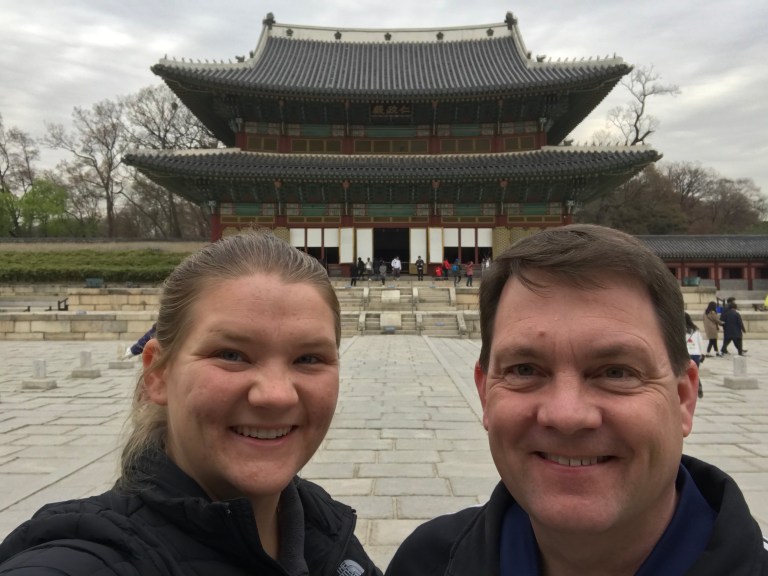
Dad’s flight on to the Philippines was Saturday evening, so we packed as much as we could into our day before he left. We decided to visit Changdeokgung palace, which is a UNESCO World Heritage Site. Changdeokgung Palace was the second palace built during the Joseon Dynasty. It was created in a way that allowed for harmony between the palace and nature. Because of this, it became the favorite palace of the royal family and was used as the primary palace for hundreds of years. Changdeokgung Palace was originally completed in 1412, but just like all of the palaces, Changdeokgung Palace has been damaged and rebuilt multiple times throughout history. Upon entering the palace, we crossed the oldest bridge still in use in Seoul – a beautiful stone bridge built in 1411. We enjoyed wandering through the palace, admiring all the buildings intertwined with nature. We stayed until the last possible moment before heading to the airport to get Dad to his flight. Next time we are in Seoul together, we plan on coming back to Changdeokgung Palace and visiting the secret garden within the palace grounds. My dad had always talked about wanting to visit Asia, and we had talked about trying to find a way to meet up during my year of adventure since before I left in August. It was so special that we got to spend these two days together. I will cherish our time together in Seoul forever – these were definitely core-memory moments.


I have had a full day every day since arriving in Asia, so on Sunday I spent the whole day doing nothing but relaxing. It was exactly what I needed to rejuvenate for the rest of our Asia trip.
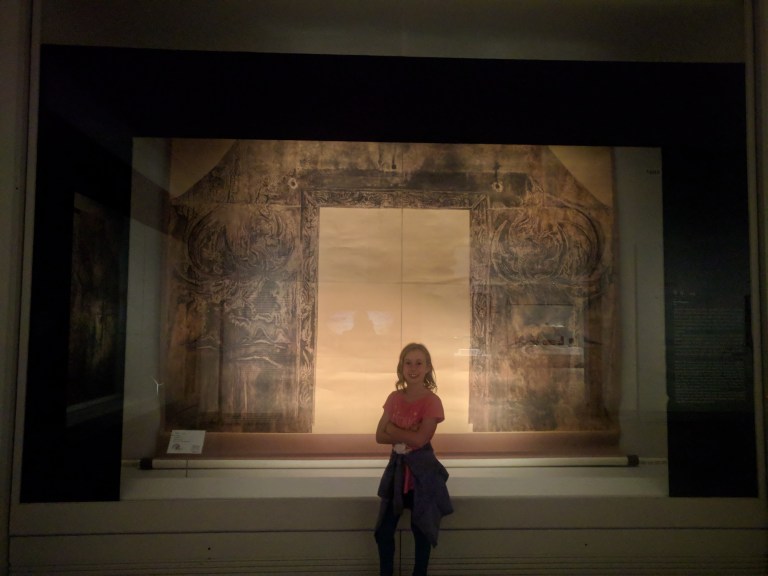
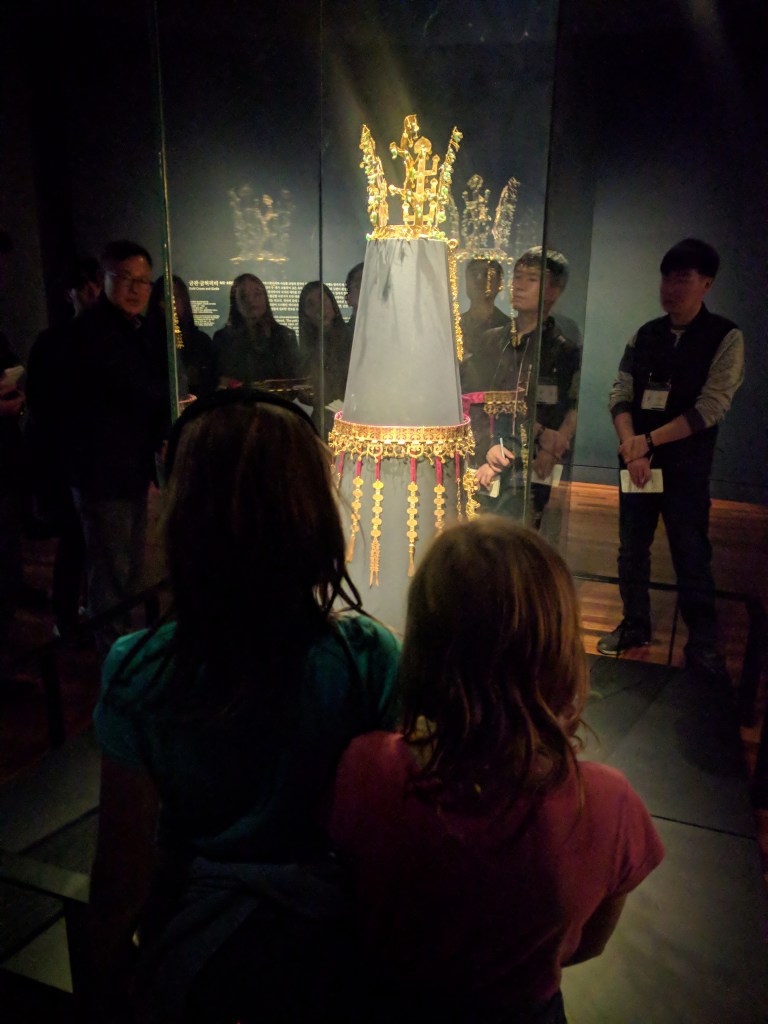
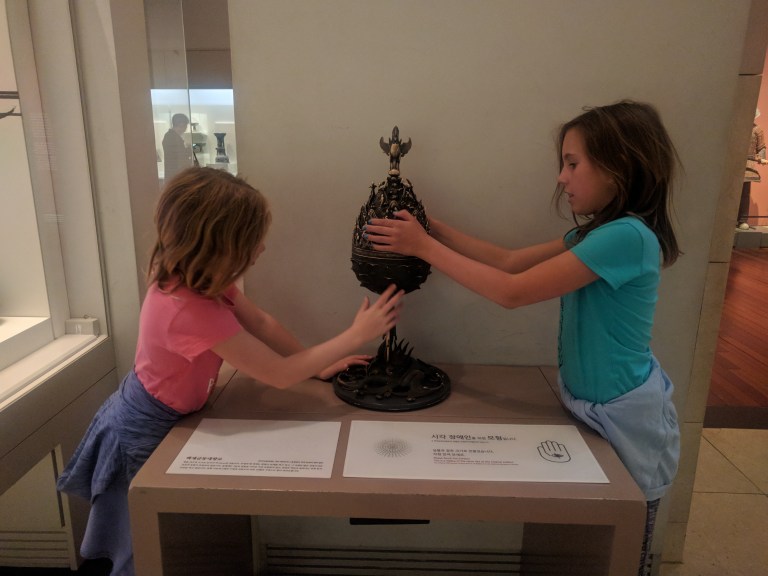
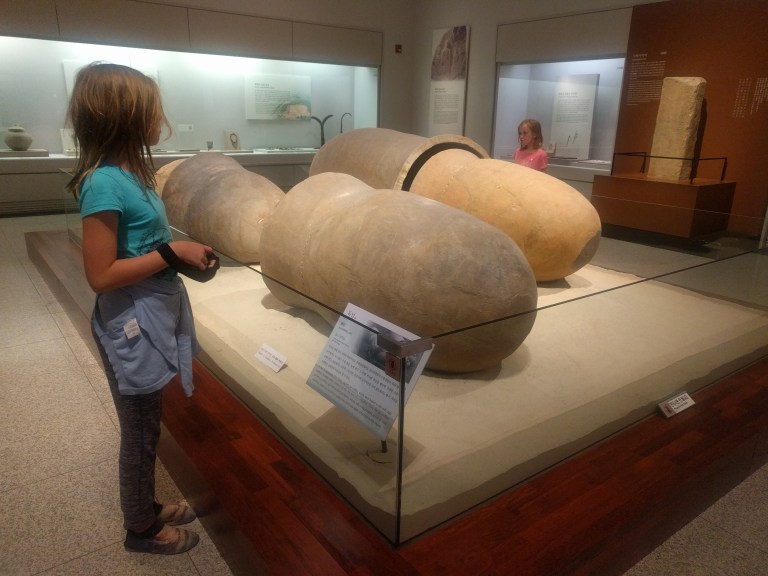
We began our first full week in South Korea by visiting the National Museum of Korea. The National Museum of Korea is a large museum, so Audrey, Maurene and I decided to focus on Korean history. Throughout the museum it was fascinating to remember that until the most recent 75 years, Korea was one nation. Our favorite artifacts were reconstructed paintings from a grave that is in what is now North Korea created during the Goguryeo Kingdom, a crown created during the Silla Kingdom, and an incredibly intricate egg shaped incense burner with corresponding touch station. It was also fascinating to learn that pottery was so important throughout Korean history, it was even sometimes used as burial caskets.

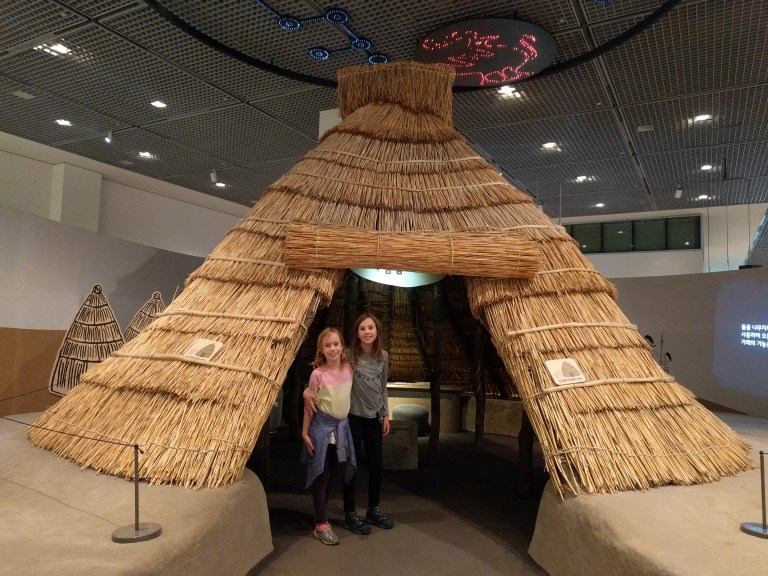
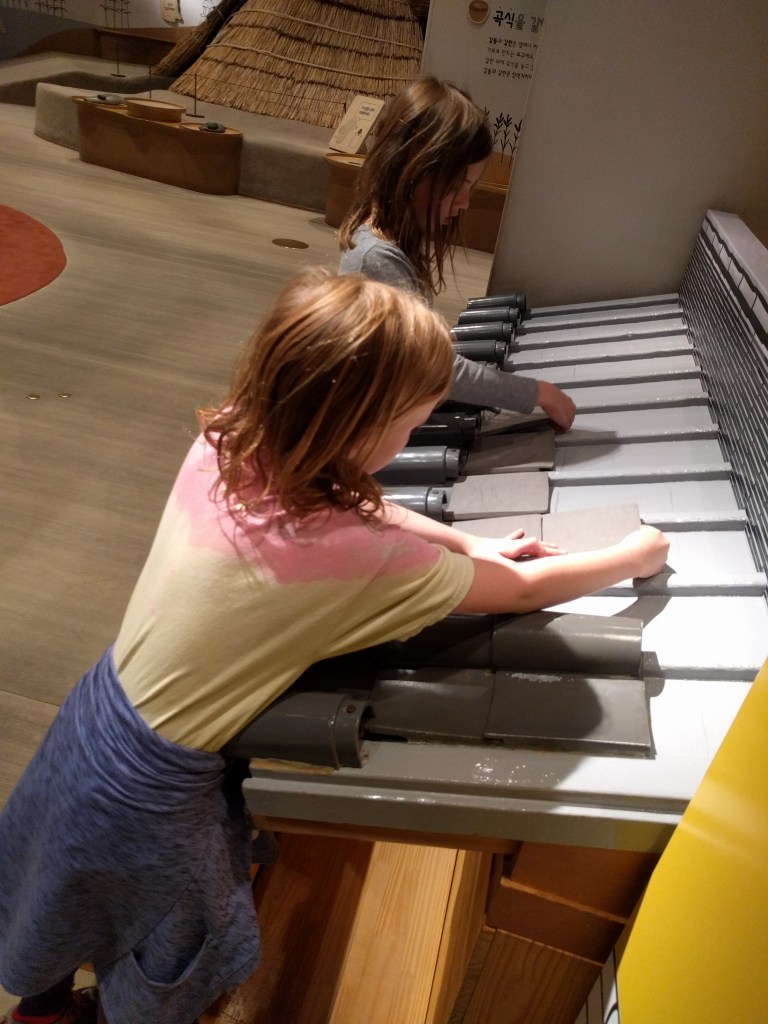
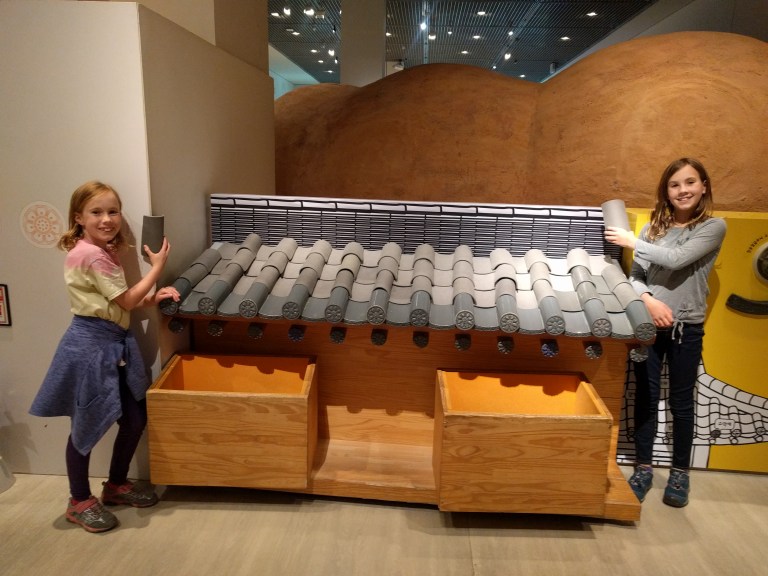
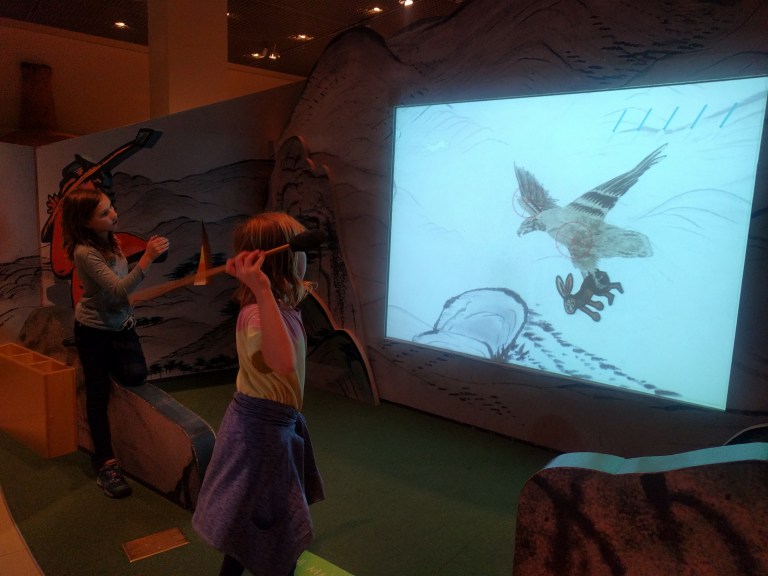
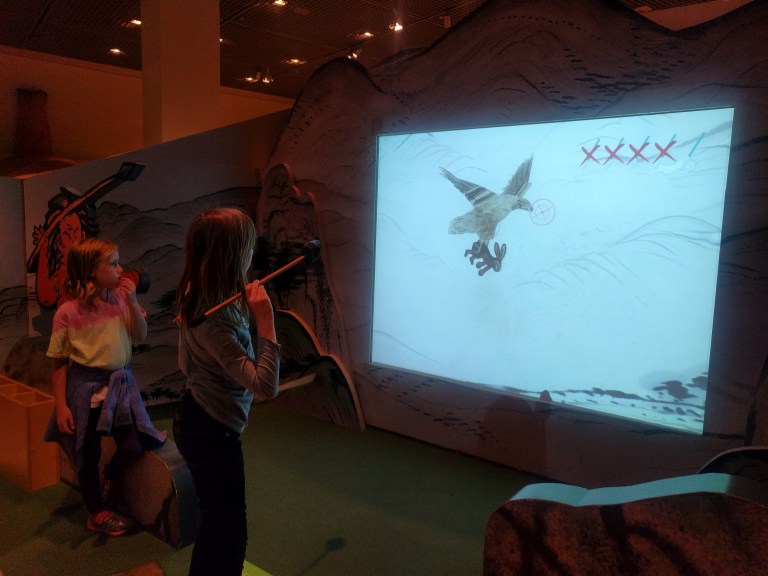
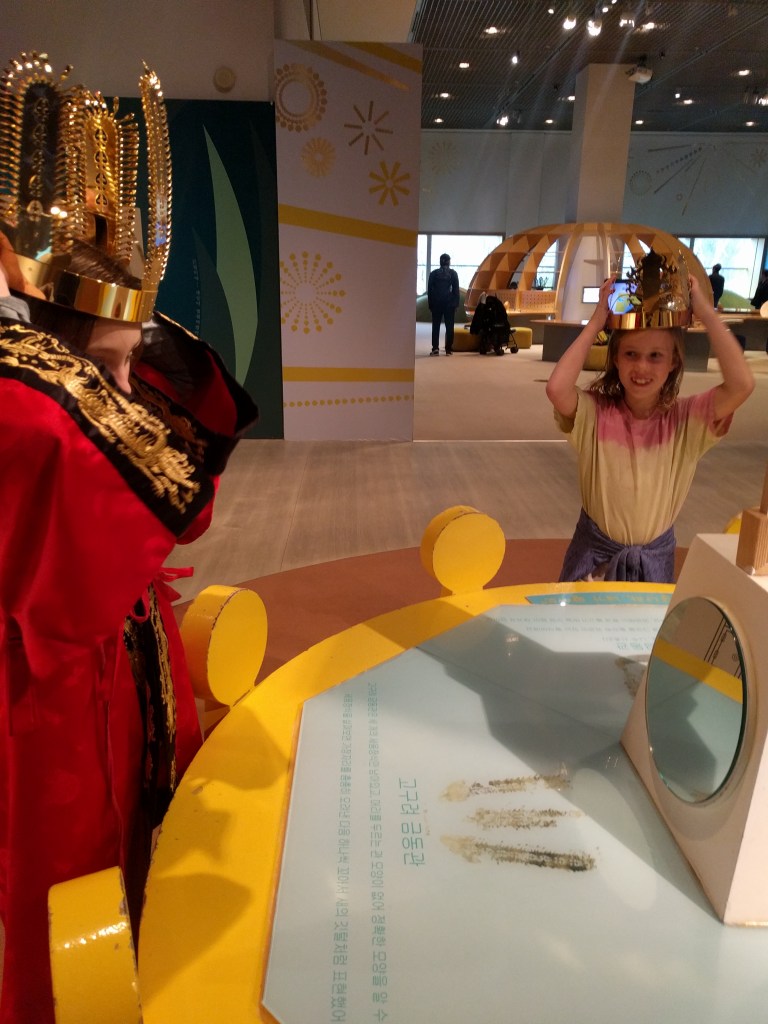
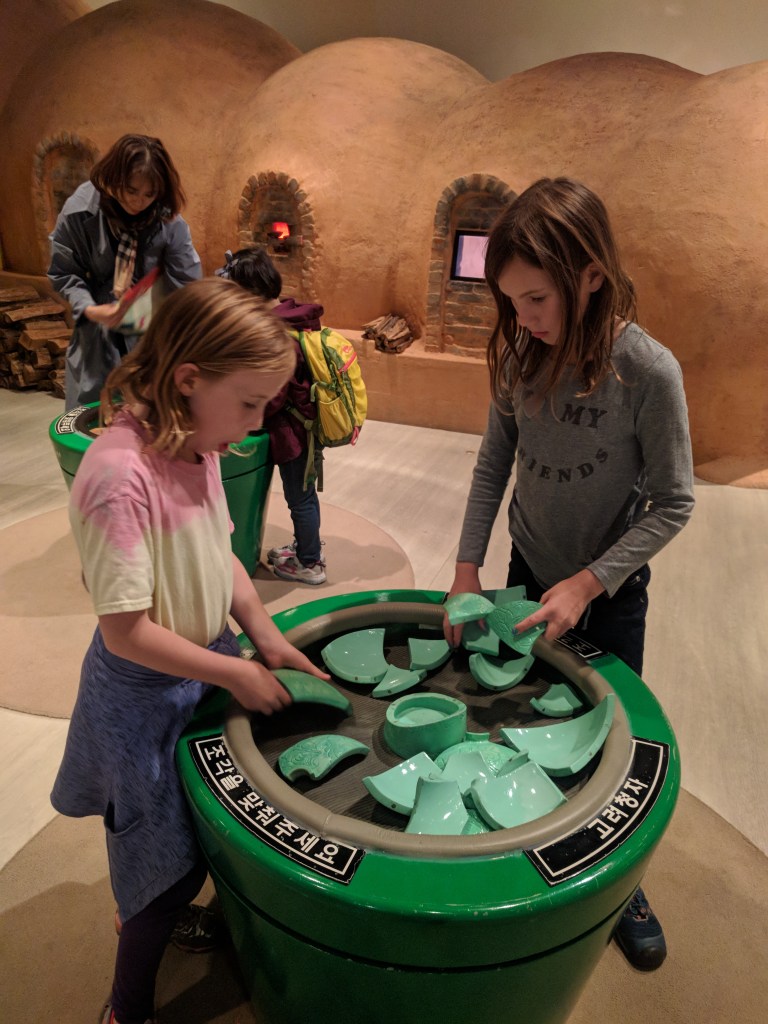
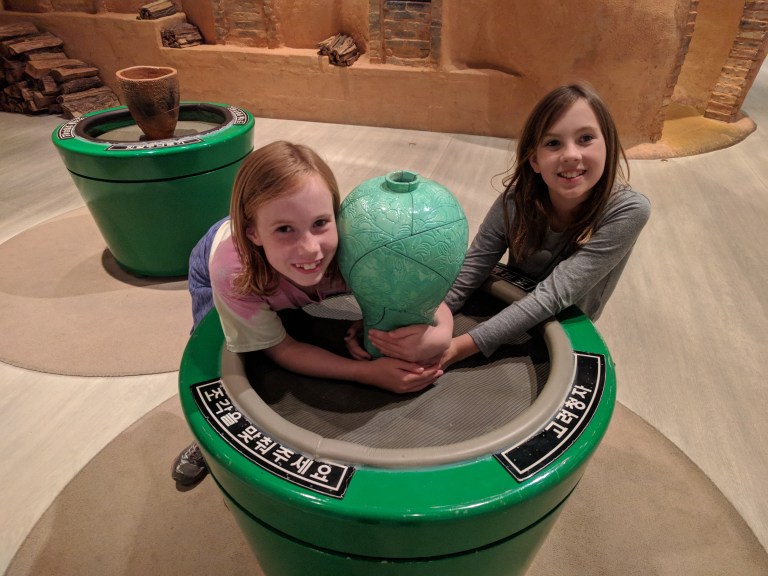
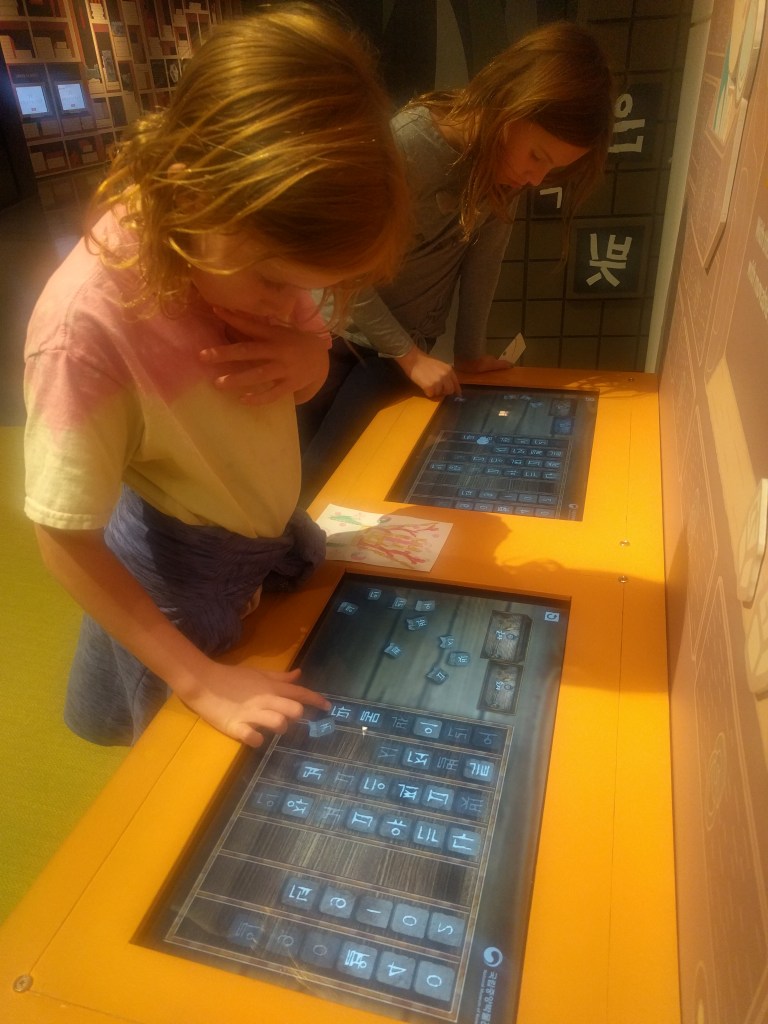
Our plans for Tuesday changed to allow us more time at the National Museum of Korea. Specifically, we wanted to visit the Children’s Museum within the National Museum of Korea. The Children’s Museum section was wonderful, and was mostly not too young for the girls. The first section was all about different types of houses that were found in Korea throughout history. The girls enjoyed learning about Korean roof tiles and practiced tiling a roof so that the rain would not enter into the building. We also learned about how life in Korea changed over time alongside the houses. Audrey and Maurene’s favorite part of this exhibit was getting to “hunt” rabbits with “spears” via a touch screen video-game. Next, Audrey and Maurene played dress up in copies of some of the artifacts that we had seen yesterday – including robes and crowns. We then learned more about how pottery is made, how throughout time many artifacts like pottery are broken, and how archeologists put artifacts like pottery back together while restoring it. We practiced being archeologists by “restoring” a few pottery puzzles. The final section we had time for during our allotted exhibit time was an exhibit about Korean metal movable type printing presses. The book believed to be the oldest book in the world printed with metal type is a called Jikji, and is a compilation of Buddhist sayings created by a Korean monk in the late 14th century. Audrey and Maurene enjoyed watching a video showing how metal movable type is created and used, and practicing writing characters backwards so that they could be printed correctly.
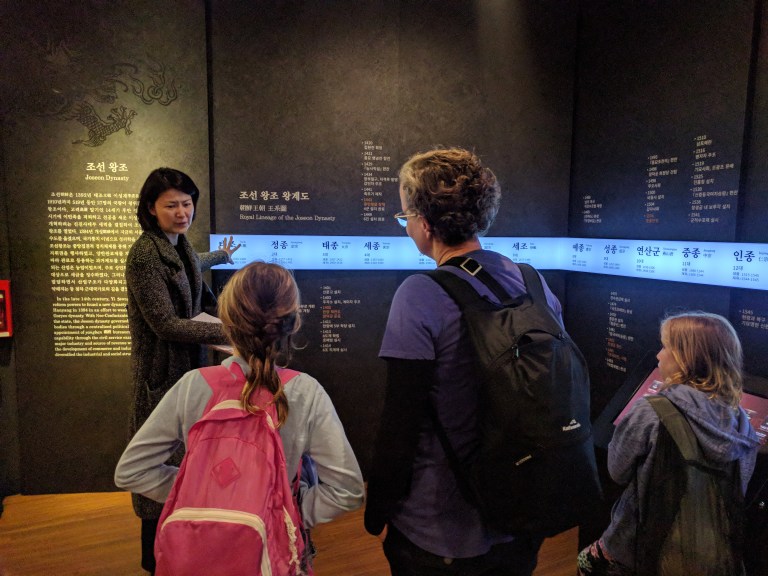
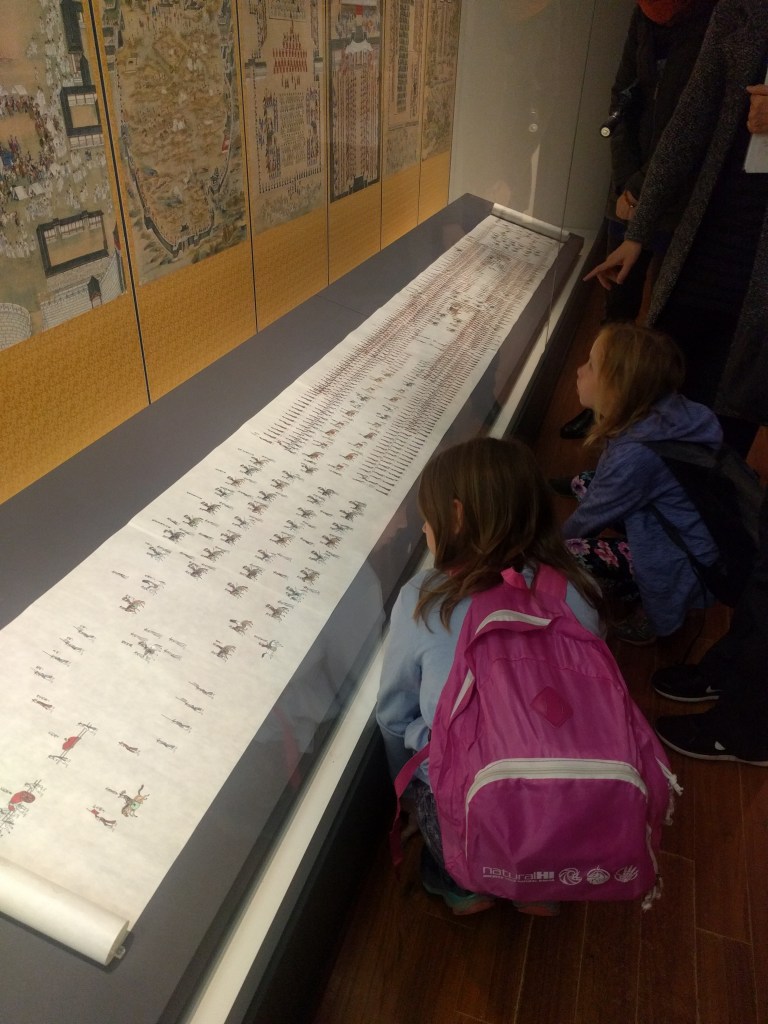
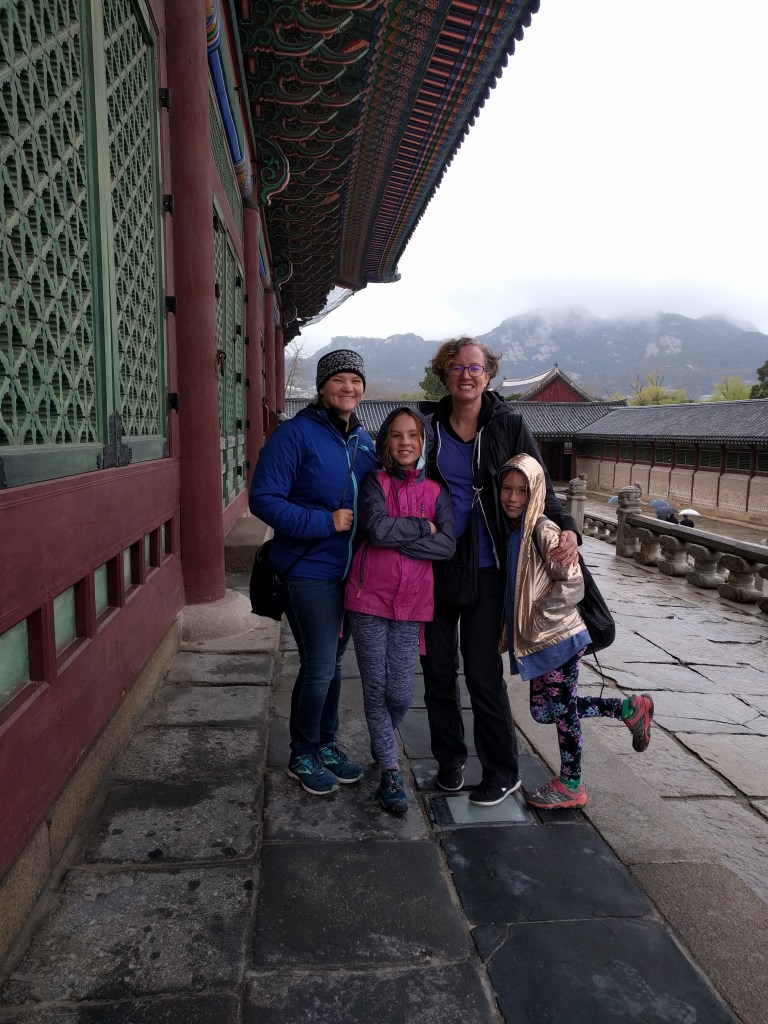
Our Airbnb hosts were absolutely adorable, and showed us the most incredible Korean hospitality. When we arrived, one of our hosts told us that her best friend was a certified English tour guide and would love to give us a tour one day if we were interested. We of course said yes, and on Wednesday we met our host and her best friend, Carol, for a tour of the National Palace Museum and Gyeongbokgung Palace. The National Palace Museum includes artifacts that were found in the royal palaces throughout Seoul during the Joseon Dynasty. We began by learning about the 27 kings that ruled Korea during the Joseon Dynasty, which lasted from 1392 to 1910. We then moved through the museum, observing a royal throne and painted screen, clothing, books, and possibly the most intricate parade plans ever created. We learned that the kings of the Joseon Dynasty were required to study three times per day, each day for their entire lives. We also learned that Korean society was divided into classes. The noble class contained both civil officials and military officials. In order to move into the noble class, you had to pass the civil service examination. If you passed, your family was considered part of the noble class for three generations. In order to maintain membership within the noble class, someone else in your lineage would have to take and pass the civil service examination within those three generations. If your children or grandchildren did not pass the exam, your great-grandchildren were moved back into the common class. I think this history with focus on education explains a lot about current views in Korea about the importance of education. We also learned that throughout the Joseon Dynasty, everything the king did and said was recorded by two different scribes. Because of this, there is a significant amount of recorded history allowing for detailed knowledge of life during the Joseon Dynasty.

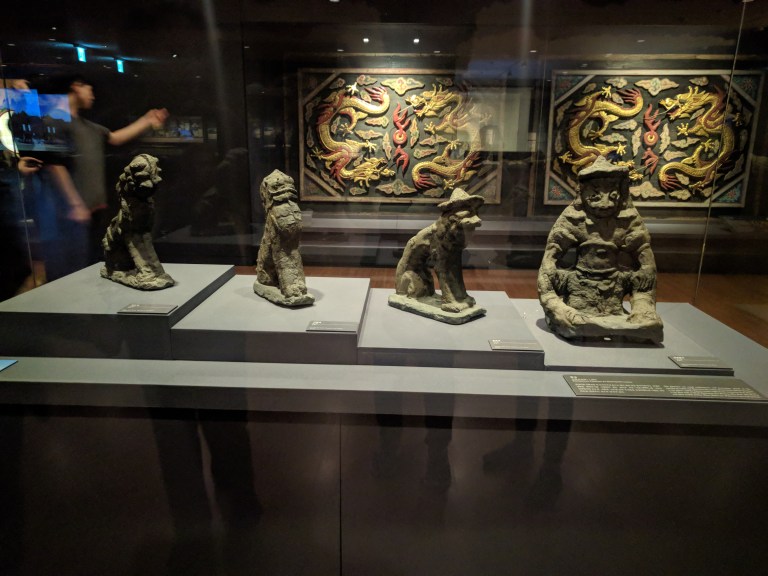
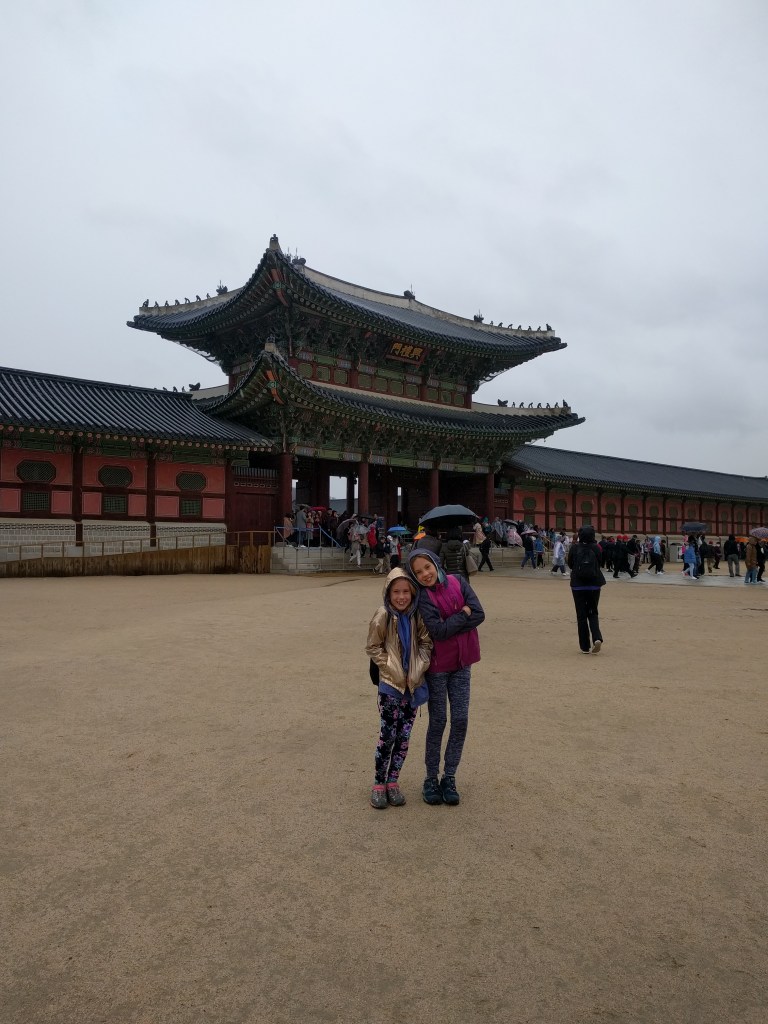
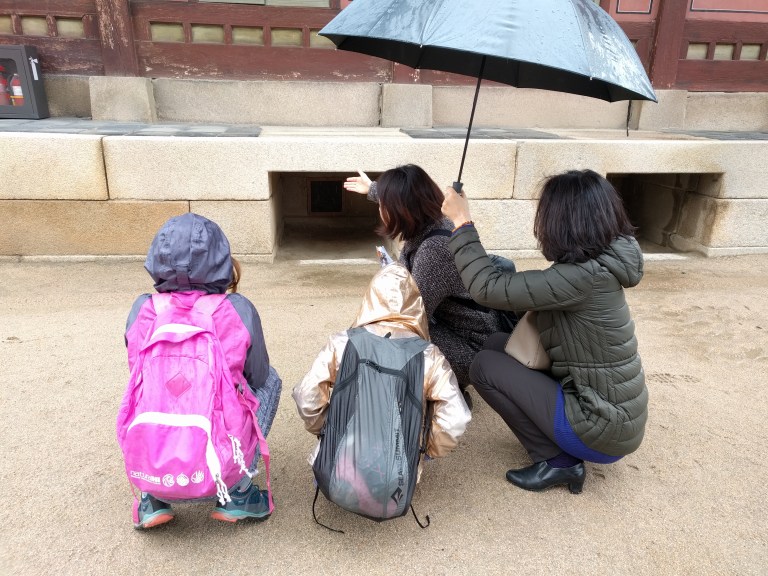
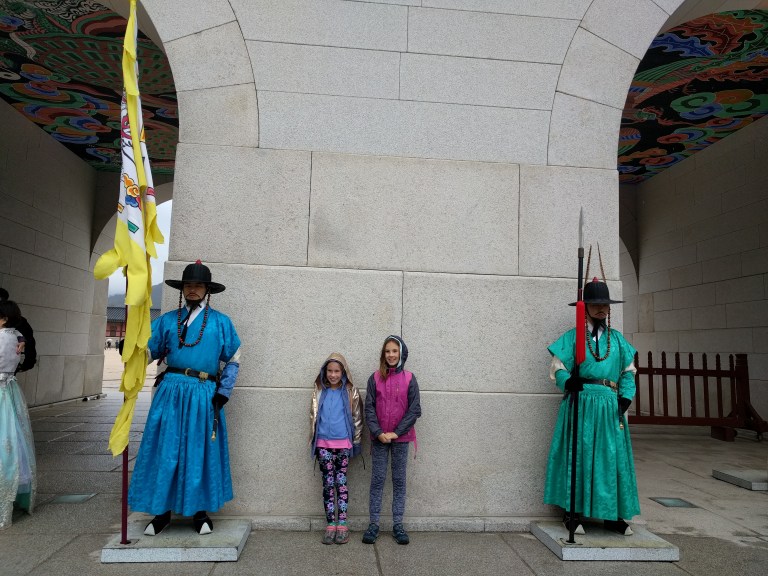
After walking through the museum, we went out to explore Gyeongbokgung Palace. Gyeongbokgung Palace was the main royal palace within Seoul during the Joseon Dynasty. Our favorite building was Gyeonghoeru Pavilion, the royal banquet hall. This particular building is unique to Gyeongbokgung palace. I am unsure if that is because the other palaces were not used for banquets, or if the other palace’s banquet halls were destroyed over time. Gyeonghoeru Pavilion was built up above a pond. In the original design, there were dragons painted on each of the pillars holding up the pavilion. The images of the dragons were then reflected in the water, creating the illusion from within the banquet hall that dragons were swimming around the pond. We also enjoyed learning more about traditional Korean heating systems, which involved heating rooms via stone floors, using fireplaces underneath the buildings. As we were leaving, we had the chance to see a few of the guards that stand outside the palace walls. We had a wonderful time with Carol, and were excited when she invited us to spend another day with her during our time in Seoul.
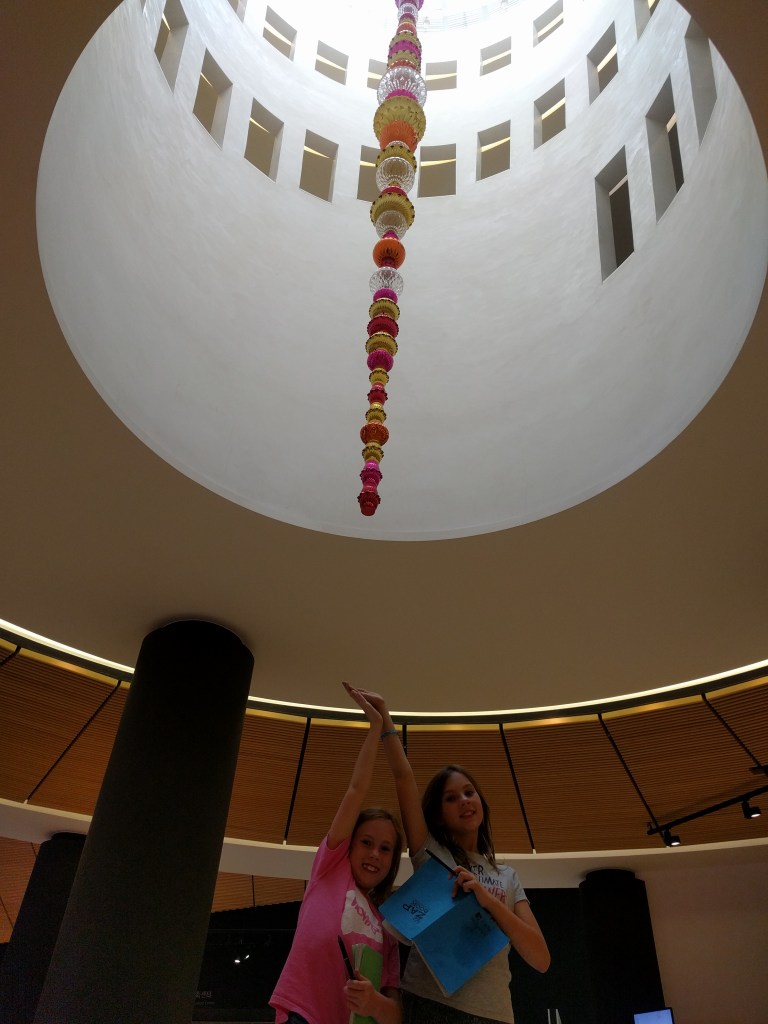
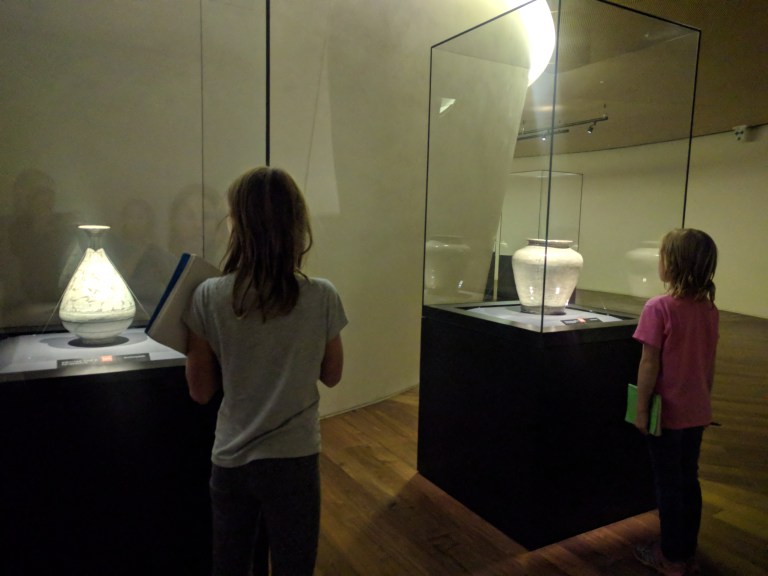
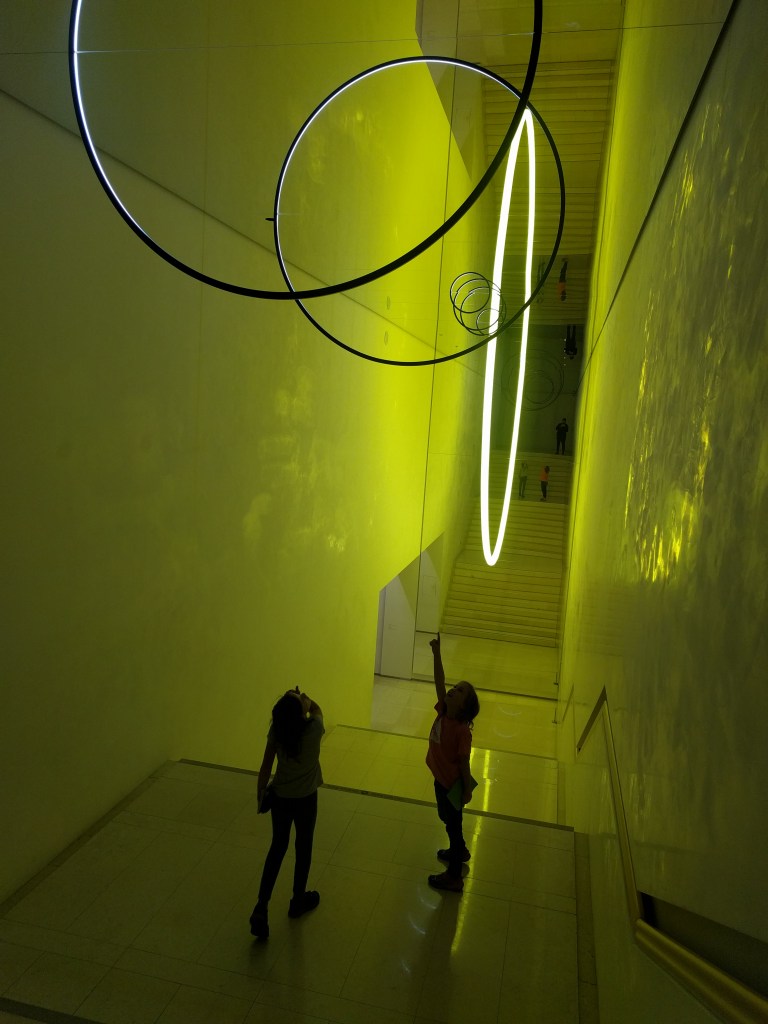
We spent Thursday at the Leeum, Samsung Museum of Art. The Leeum, Samsung Museum of Art is comprised of three separate sections. We chose to visit the exhibition in the historic art section, “Beyond time.” This was a fascinating exhibit because it included beautiful historic pieces of pottery and calligraphy, paired with a modern piece on each museum floor. These contrasting pieces were wonderful for prompting discussion. Audrey and Maurene enjoyed sketching a piece of art on each floor. There was also a hanging art piece in the staircase that we viewed from different angles throughout the museum, and a cool piece that used mirrors to complete circles out of smaller fragments of light. One of the pieces that the girls loved the most was outside of the museum’s front door. An artist had added LED circles that flashed through the numbers 1 through 9 in chronological order. The artist had done a survey asking how quickly different people viewed time as passing, and used the numbers to show the different views of time. Even though this particular museum did not have any internationally renowned pieces, the girls loved viewing the art just as much. It was wonderful to visit a museum where the girls had enough space to sit and sketch without causing a traffic jam!

What a great week. One more week in Seoul!
 Tales of a Traveling Teacher