
This year, I have non-travel weekends off just like a traditional teaching job. Since I don’t have a car this year, I decided to take full advantage of the numerous bus tours available from Reykjavik. I booked my tour through the company Reykjavik Sightseeing, which I would highly recommend.
On Saturday, I went on the Golden Circle tour and went whale watching.
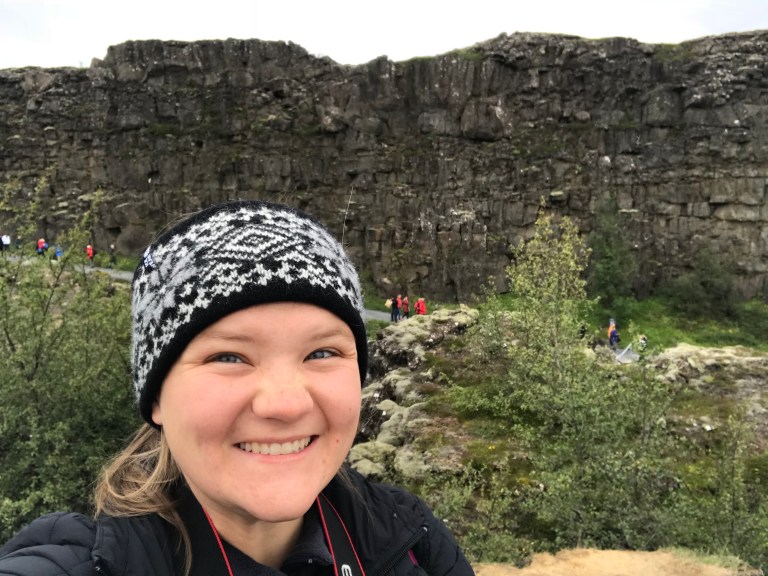
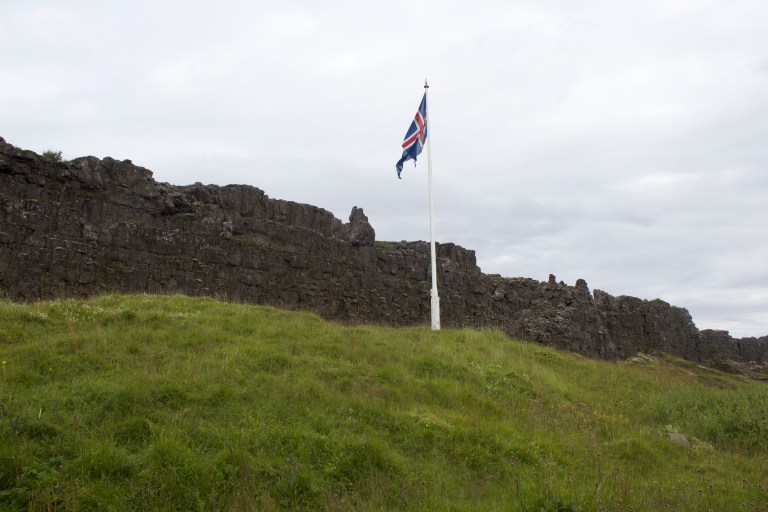
Our first stop was at Þingvellir National Park. This was the part I anticipated least, but turned out to be my favorite stop of the day. Þingvellir National Park is incredibly important to the people of Iceland. It is where Law Rock is, which is where Iceland’s annual parliament and law reading was held historically. Law Rock is also where Iceland converted from believing in Norse Gods to having Christianity as the national religion without bloodshed in the year 1000. The most amazing part of Þingvellir National Park was the fact that it just happens to be situated in the “no man’s land” between the North American and European tectonic plates. It was crazy feeling walking off the edge of the North American tectonic plate. Whoever chose Law Rock as the spot to hold parliament did an incredible job finding a scenic place for the country to come together.
Our second stop was at Strokkur Geysir, which is where the English word geyser comes from. They are incredibly serious about people not getting near the water, and mostly people took the warnings seriously. The reason they are so serious is because the water in the hot springs is between 176 and 194 degrees, and according to signs posted near the geyser, the closest hospital is 62km away. Fortunately, the water cools incredibly rapidly upon eruption, so the water vapor does not burn you if the wind blows the vapor toward you. Unfortunately, because the geyser is heated geothermally, you do end up smelling like rotten eggs if sprayed.

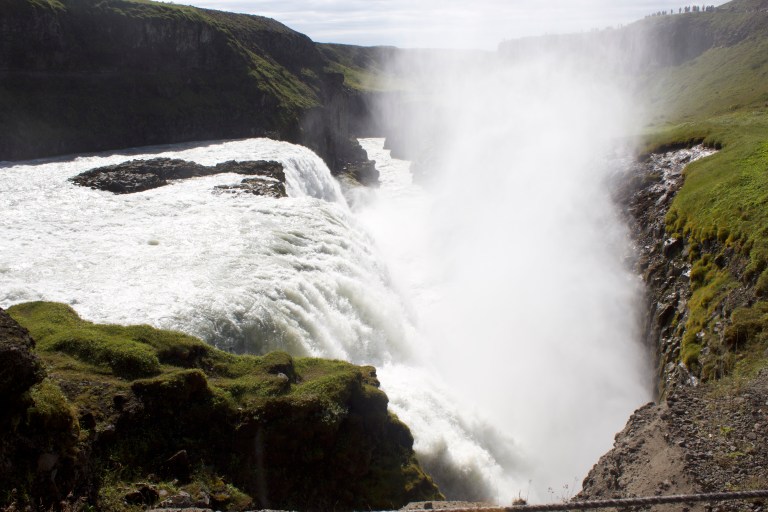
After the geyser, we went to Gullfoss. Gullfoss is an incredibly scenic waterfall that, like many waterfalls in Iceland, is formed from glacier runoff. Because it is water directly from a glacier, it is full of glacier sediment and appears white.

After going by another smaller waterfall, driving through an area full of geothermal greenhouses, and through a lava field, we headed back to Reykjavik.
Upon getting back to Reykjavik, I walked over to the old harbor to get ready for whale watching. I bought some crazy expensive gloves to keep my hands warm, and we set sail. I was so glad I bought those gloves as it was frigid as we were sailing. But the cold was totally worth the experience. We saw harbor porpoises, white beaked dolphins, and minke whales. It was incredible.
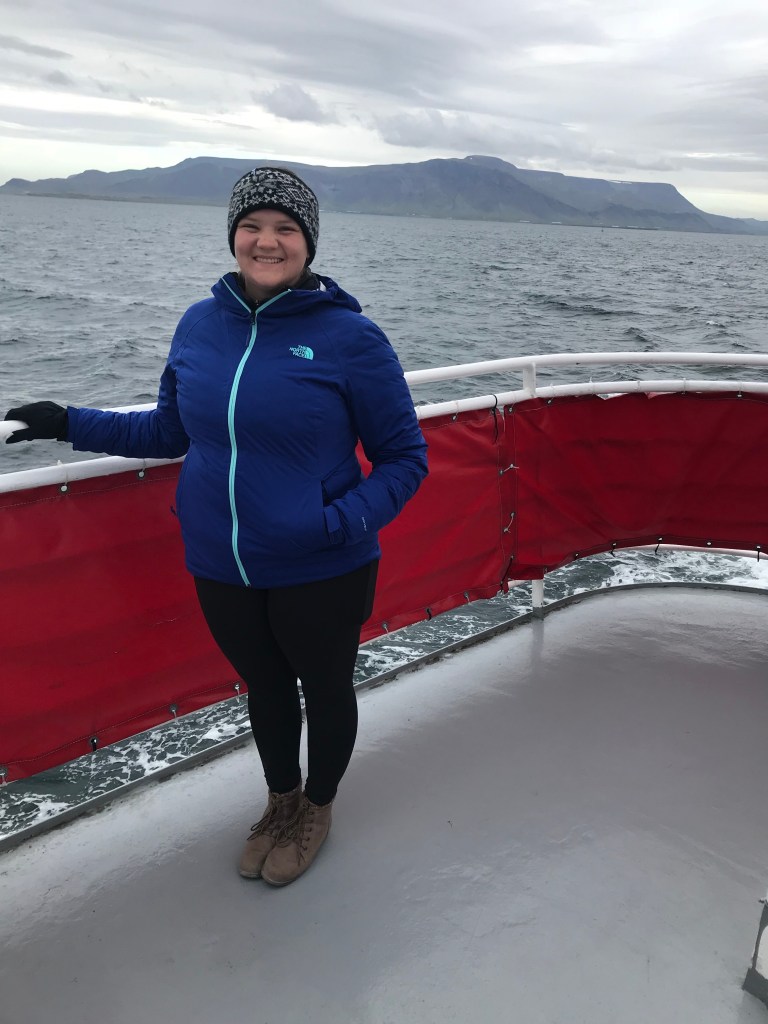
Part of the bay that we were sailing on is a wildlife refuge for whales where they cannot be hunted. I learned that only 1% of Icelanders eat whale, so the “traditional Icelandic whale” meals that can be found some places around Iceland are really just a tourist hoax, and are part of what is keeping the whale hunting trade alive. Hopefully more tourists understanding that whale foods are not actually popular among Icelanders will help stop the whale hunting here.
On Sunday, I took a south coast tour. I got to visit Reynisfjara beach, a village called Vík, the glacier Sólheimajökull, and three waterfalls: Skógafoss, Seljalandsfoss, and Gljúfrabúi.
The first part of our trip was driving for what felt like forever. The views were incredible, and the clouds were sitting just on top of the tips of the volcanoes. After about three hours, we arrived at Reynisfjara beach. It was pouring rain and incredibly cold, but was beautiful even so. Reynisfjara beach is also known as the black sand beach, because the sand is actually heavily eroded black volcanic rocks. Reynisfjara beach also has these fantastic basalt columns that form when lava cools as it hits the ocean under just the right conditions. Within the basalt column walls, there are a few caves. I gladly used the cave for shelter as it was cold and pelting rain so I could look around and get some photos. And, I was lucky enough to get to see some puffins! They only nest on the cliffs around Iceland for a few months each summer.
-
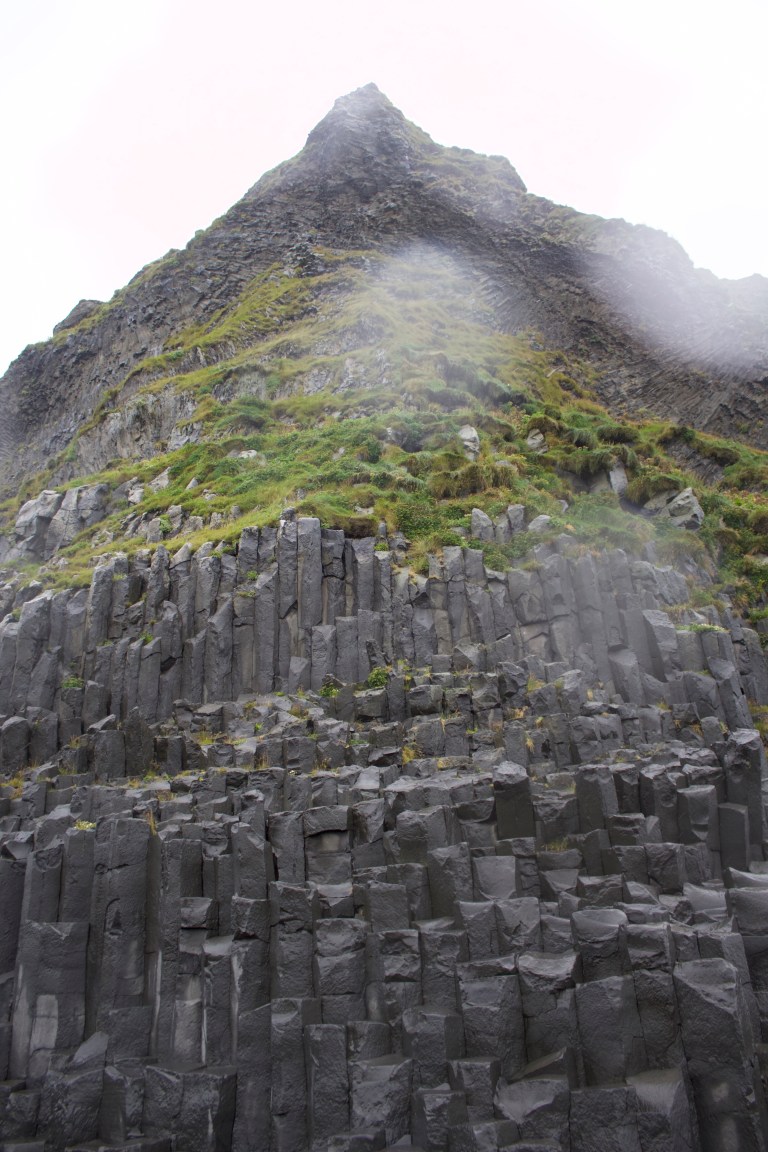
Basalt Columns
-
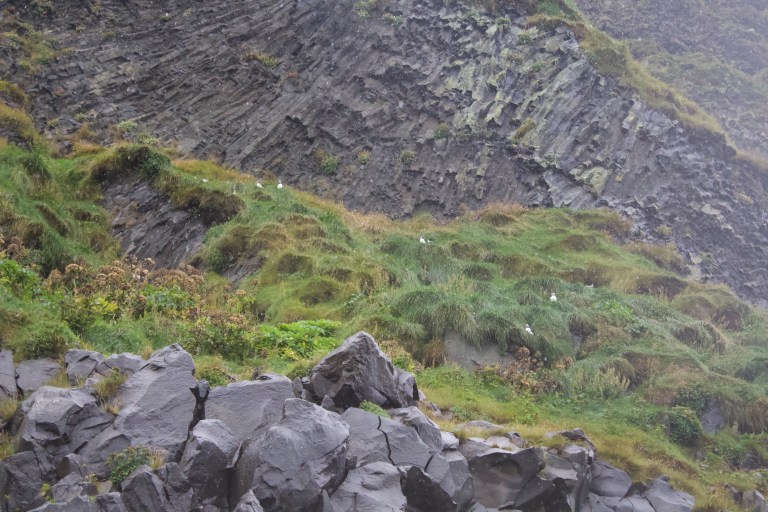
Hard to spot, but there are puffins!
I had no idea when booking this tour that Reynisfjara beach is both incredibly beautiful, and is known as Iceland’s deadliest beach. Our airbnb host, our tour guide, and a few signs on the way to the beach, warned us to stay well away from the water. There are these crazy things called sneaker waves that are huge waves that appear out of nowhere. If you are standing too close to the water, the sneaker waves knock you over and pull you out to sea with a crazy forceful undertow. Thankfully, most people seemed to take the advice to stay away from the water pretty seriously and enjoyed the beauty of the beach from a safe distance away from the water.
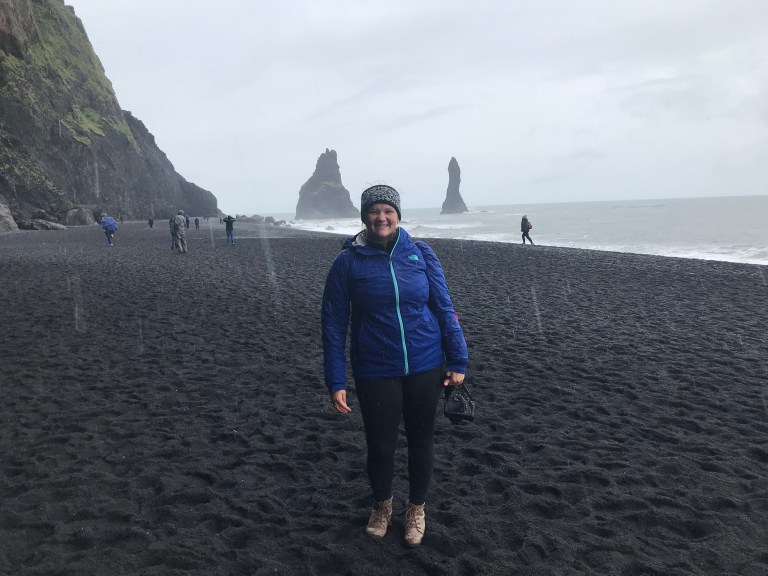
We then took a lunch break in the southernmost town in Iceland, Vík. While in Vík, I got to see some trolls who turned to stone in the ocean. Legend has it that they were three trolls pulling a ship who misjudged the time the sun would rise and could not make it back to their caves in time. As with all Icelandic trolls, they turned to stone as soon as the sun’s rays hit them.
-
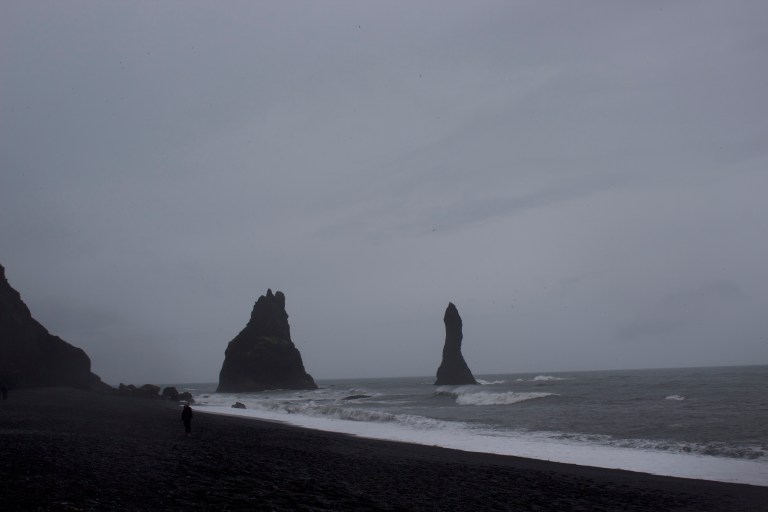
Icelandic trolls
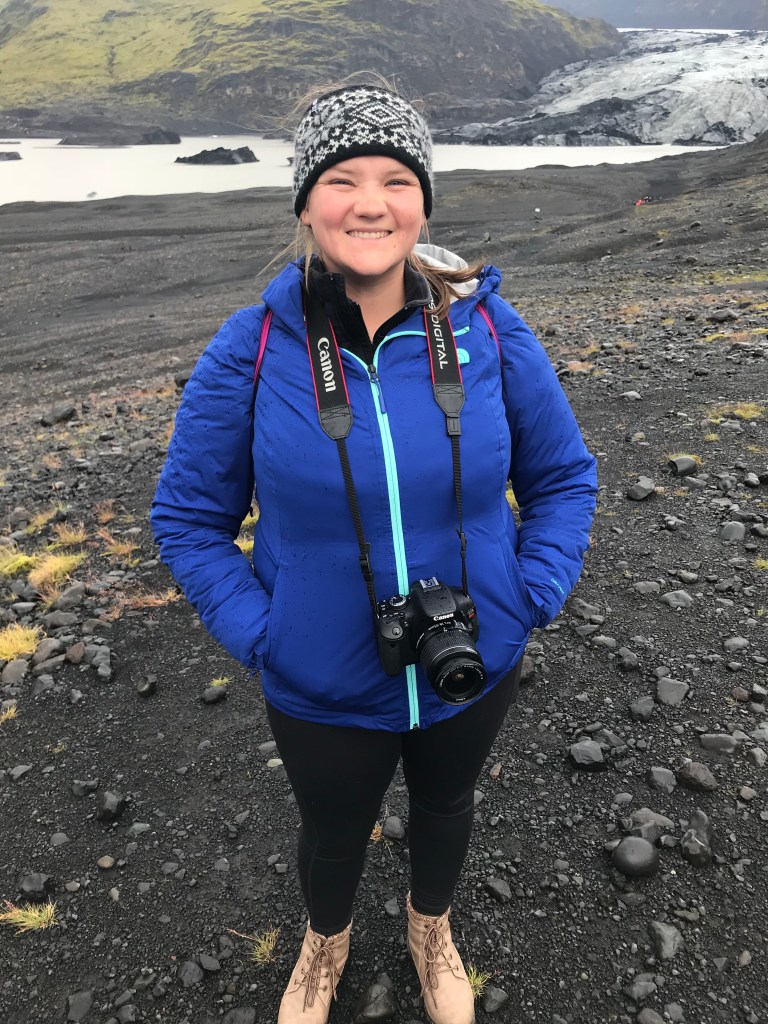
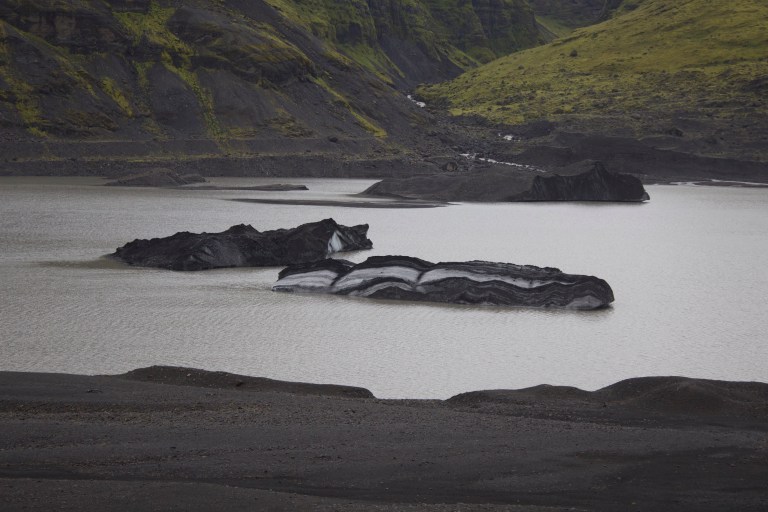
After lunch, we went to walk as close to the glacier Sólheimajökull as you should get without a guide. I learned that there are these hollow tubes that form in glaciers that can be hundreds of meters deep and can be covered with snow. Because you really don’t want to fall down one, as you may never be found, guides are important when going onto the actual glacier. Walking toward Sólheimajökull glacier, I was just in awe of the sheer amount of ice in one place. Other than the sheer amount of ice, I was amazed to see black lines throughout the ice. Come to find out, the black lines are actually layers of volcanic ash from eruptions throughout the history of Iceland that are trapped between layers of ice.
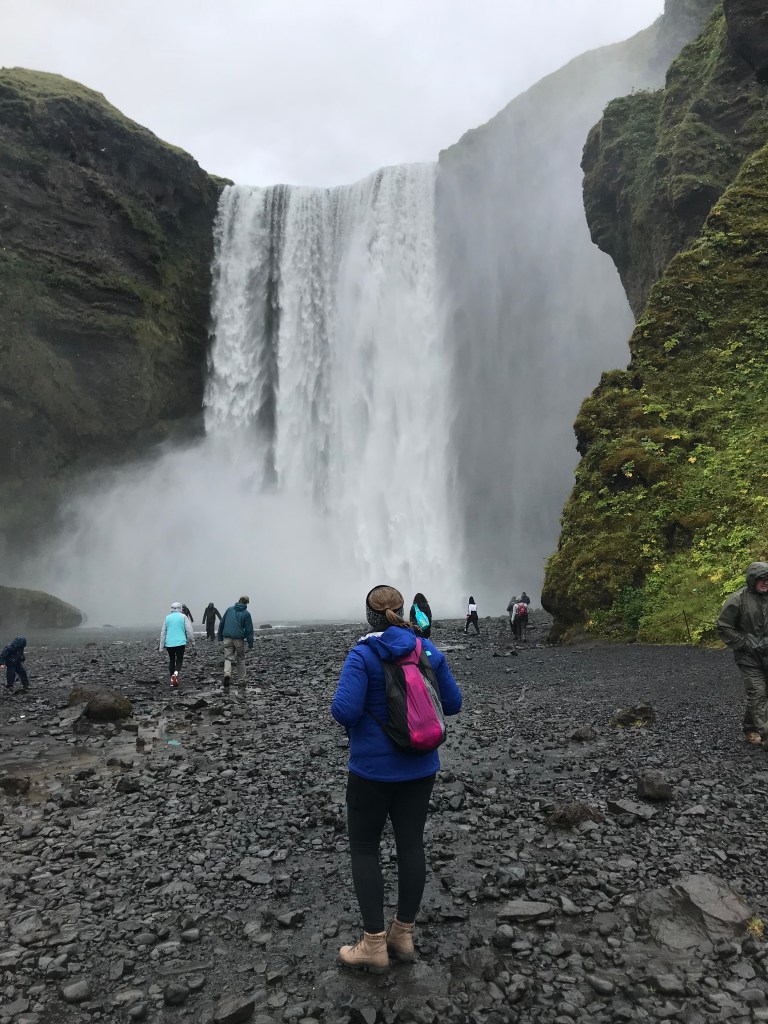
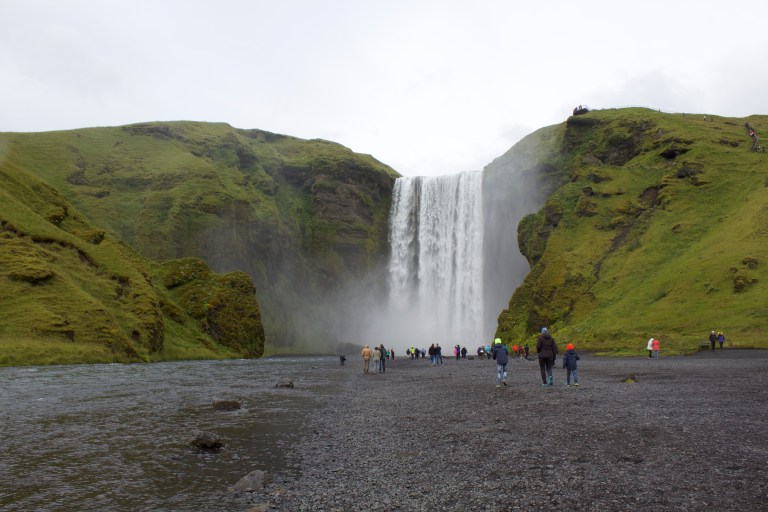
Next we went to see Skógafoss. Luckily, by this time the rain had stopped and exploring was much more enjoyable. Legend has it that there is a chest filled with gold and treasure behind the waterfall, and that three brothers once found the chest and tried to pull it out. Unfortunately for the brothers, the chest was too heavy and the handle broke off. The handle can now be seen in the Skógar museum, and the chest supposedly is still behind the falls. While I didn’t find treasure, I did enjoy the views.
Next we went to my favorite stop of the day. On the way to see Seljalandsfoss, our tour guide told us there was another waterfall nearby that was behind a gorge in the rocks, called Gljúfrabúi. He told us that if we wanted, we could walk through the gorge and get right up by the falls. The two options were then to either have cold, wet feet for the rest of the day, or to take our shoes off and go barefoot but have dry socks and shoes to put back on. So naturally, my shoes came right off.
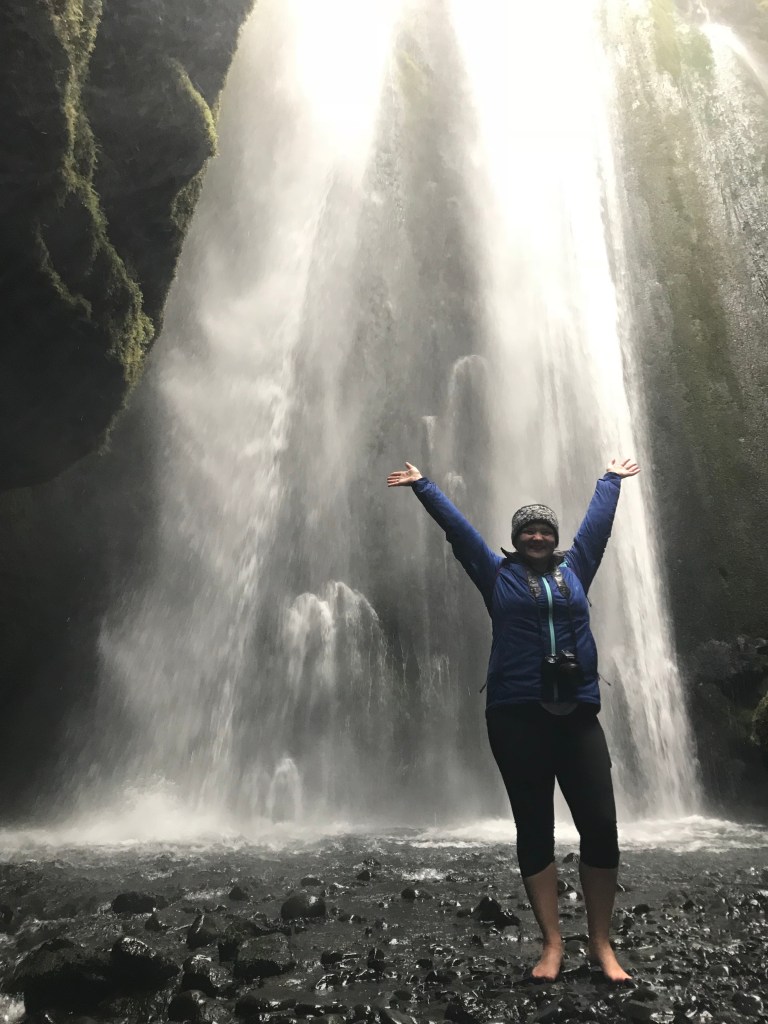
To get through the gorge, there is a little rock path. Many of the rocks are just above the water, but some are just below so you have to step directly into the water. After you make it through the gorge, you step up onto a large rock and are suddenly standing just below the waterfall. I don’t think I have ever been so cold in my life. The water was cold on my feet, sure, but the really cold part was the spray drenching everyone at the bottom of the falls. And yet, everyone was having a marvelous time. The experience was absolutely worth the cold. I would recommend to anyone coming to Iceland to go find this waterfall and brave the cold to go stand on the other side of the gorge. And I’m glad I had extra socks in my bag and dry shoes to put on after getting out of the gorge. (Also, shoutout to the sweet woman who sat directly in the spray to help me get a picture. You were the real MVP of the day.)
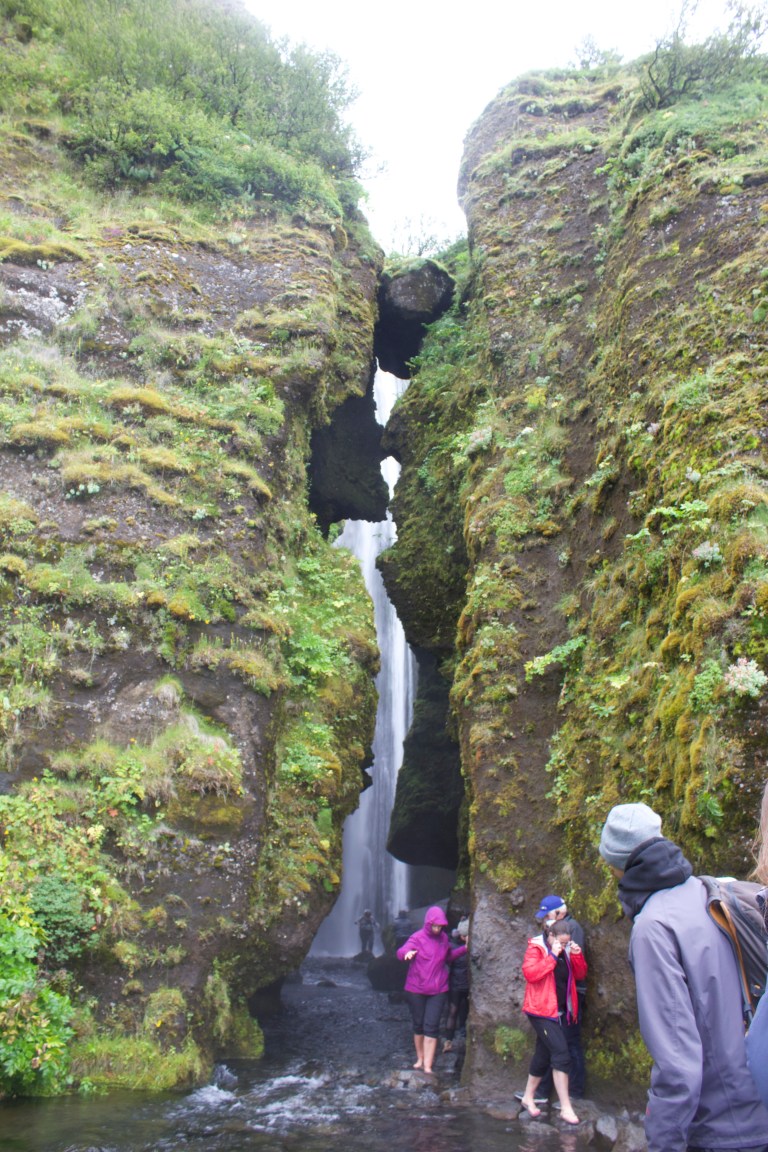
-
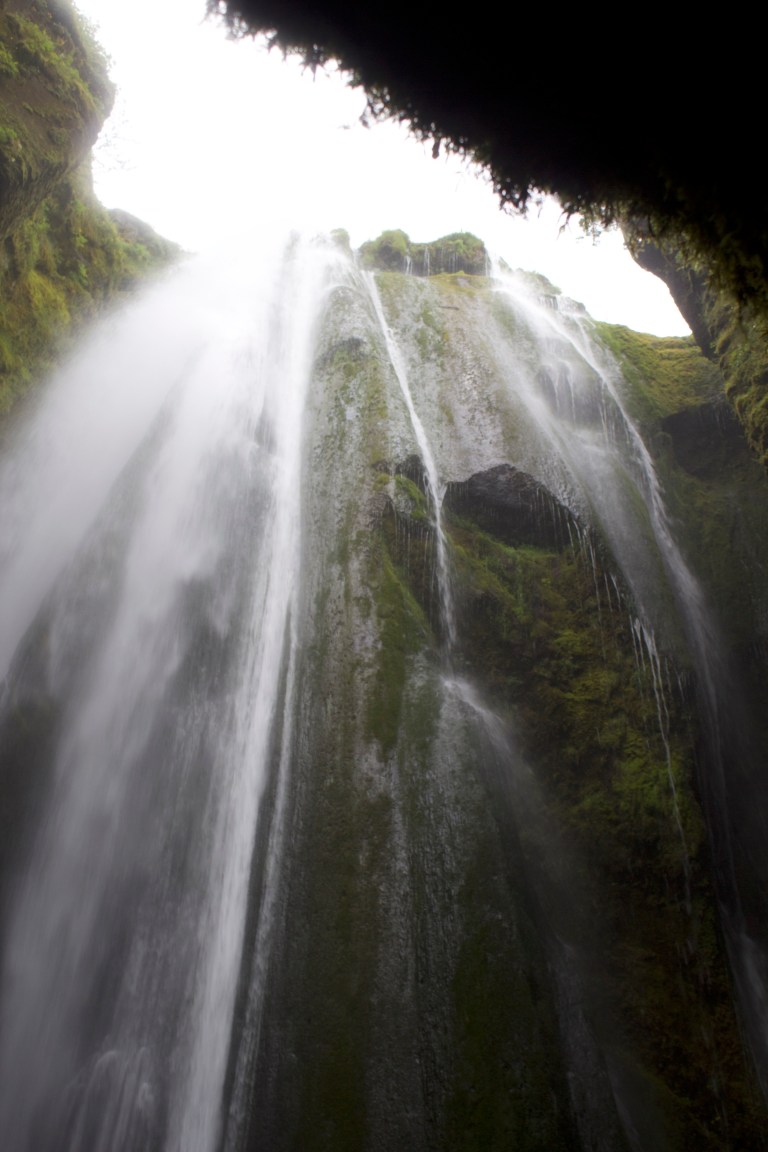
View from the bottom of Gljúfrabúi
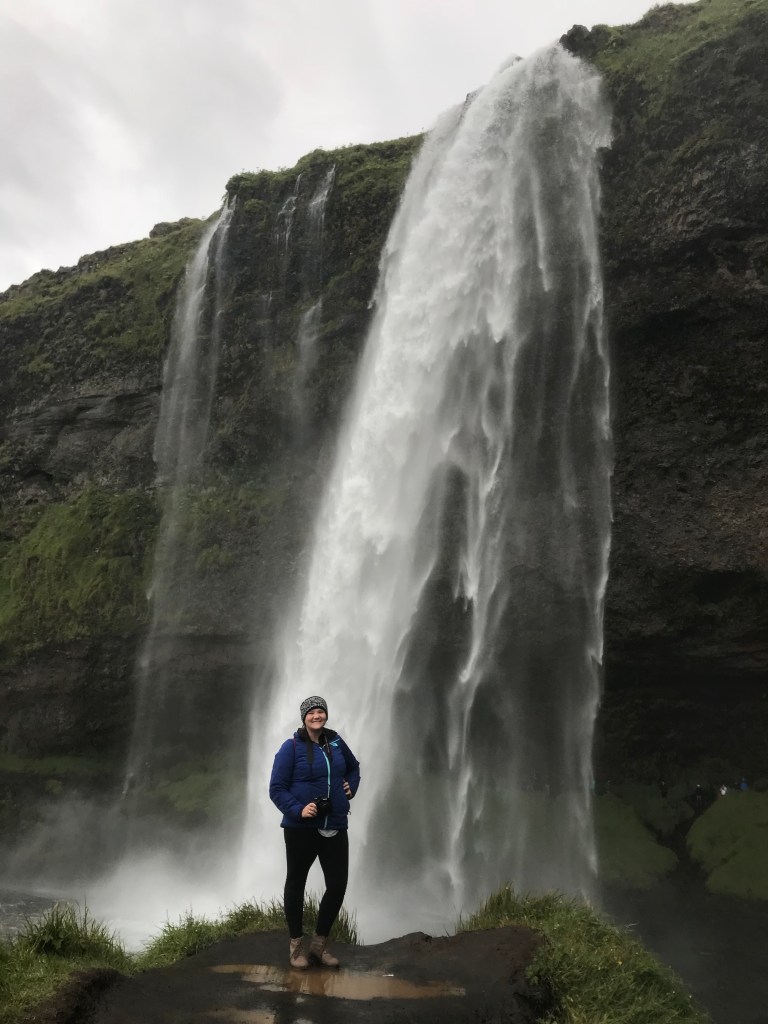
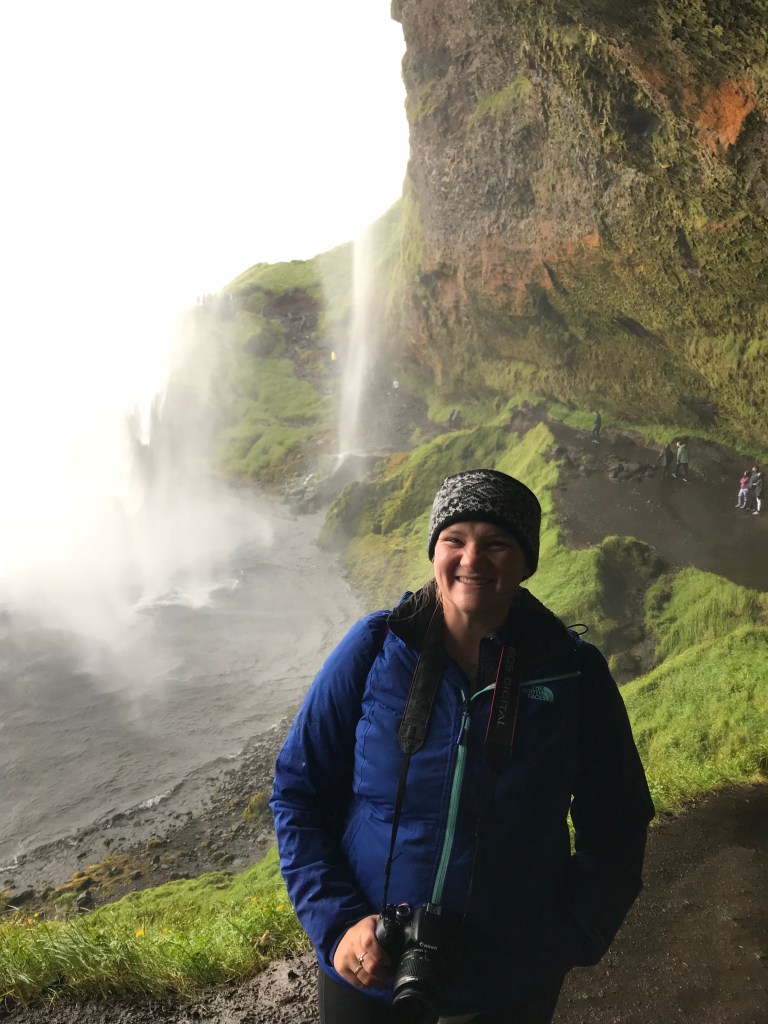
After getting my shoes back on and my leggings rolled back town over my ankles, I went to see Seljalandsfoss. Seljalandsfoss is a plunge waterfall, which means it can be walked behind. Walking behind Seljalandsfoss was the icing on the cake of an incredible day in Iceland. If you visit Seljalandsfoss, definitely take the path leading to the right side of the waterfall when going behind. The right side has stairs, where as when you are leaving on the left side, you have to climb over all of the rocks. I was determined to have gone all the way around the waterfall, so I went up the stairs and then out over the rocks. And then I walked right over to the little food stand and ordered a hot coffee to drink on the bus ride home as I thawed.

As most people that know me know, I am not someone who likes the cold. And yet even as Iceland has been rather chilly, I totally get why people move here. I would absolutely recommend visiting to anyone.
 Tales of a Traveling Teacher
beautiful 🙂
LikeLike
What a great experience.
LikeLike